
 The Lookout
Bloomberg’s big-soda ban approved by NYC health board
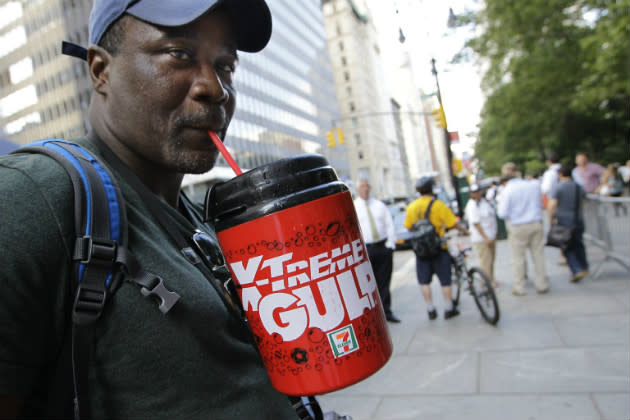
The New York City Board of Health approved Mayor Michael Bloomberg's ban on large sugar-sweetened drinks Thursday, as expected. Eight of the board's nine members voted in favor of the ban; one, Dr. Sixto R. Caro, abstained.
"I am still skeptical," Caro told The Associated Press. "This is not comprehensive enough."
The plan, proposed by the mayor in May, calls for a ban on the sale of all sugar-sweetened beverages—soda, sports drinks, energy drinks, sweetened teas, coffees and fruit drinks—in cups larger than 16 ounces at the city's restaurants, food carts, fast-food joints, movie theaters, stadiums and sports arenas. The Barclays Center, the new arena for the Brooklyn Nets opening next week, will comply with Bloomberg's ban, its developer, Bruce Ratner, said Thursday.
The new policy covers any beverage that contains more than 25 calories per 8 ounces--but does not include diet sodas, soft drinks sold in grocery stores and in most convenient stores or those that contain 70 percent or more fruit juice. Beer is also not included in the ban.
"Six months from today," Bloomberg tweeted, "our city will be an even healthier place. NYC's new sugary drink policy is the single biggest step any gov't has taken to curb #obesity. It will help save lives."
Nearly 60 percent of the city's adults and 40 percent of its children are overweight or obese, the mayor's office said, putting them at higher risk for disease.
But Bloomberg's ban has plenty of critics, who say the mayor is ushering in yet another "nanny state" policy.
A recent Quinnipiac poll found that 51 percent of New Yorkers oppose the new sugary drink policy. A New York Times poll conducted in mid-August found that number to be closer to 60 percent. (Just 36 percent of those polled thought it was a good idea.) And last month, the American Beverage Association launched a campaign against the plan, saying, "150 years of research finds that people consume what they want."
"The New York City health department's unhealthy obsession with attacking soft drinks is again pushing them over the top," Stefan Friedman, a beverage industry spokesman, said in May when Bloomberg's plan was formally introduced. "It's time for serious health professionals to move on and seek solutions that are going to actually curb obesity. These zealous proposals just distract from the hard work that needs to be done on this front."
"Say goodbye to venti Frappuccinos, gallon movie theater slurpees and big sodas," Jill Colvin wrote on DNAinfo.com.
But Mayor Bloomberg does have some high-profile supporters, including celebrity chef Jamie Oliver, who congratulated him on his blog.
"I applaud Mayor Bloomberg's initiative as I believe he's one of the few people in power who is taking practical measures to fight obesity," Oliver wrote. "We hear a lot about how we shouldn't be 'nannying' people with laws about how they live their lives, but with such a massive problem as the obesity epidemic to deal with, we are way past the point where [we] can trust people to make better choices. We have to help them make better choices. Good for Mayor Mike for putting the health of his city's people first and holding firm against the expected pressure from the food and soda industries."
According to the Times, the ban should have at least a "broad impact." Half of New Yorkers polled by the paper said they drank at least one soda per week; a third drink several per week. And only one in six said they did not drink soda at all.
"This is not the end," Eliot Hoff, a spokesman for New Yorkers for Beverage Choices, said in a statement after the board's vote. "We will continue to voice our opposition to this ban and fight for the right of New Yorkers to make their own choices. And we will stand with the business owners who will be hurt by these arbitrary limitations."
Soda purveyors have six months to comply with the new plan, and nine before they face fines for defying it. But some observers, like The New Yorker's James Surowiecki, suspect that won't be necessary.
"It's true that the ban will be easy to circumvent: if you want to drink thirty-two ounces, you can just buy two sixteen-ounce servings," Surowiecki wrote. "But Bloomberg's proposal makes clever use of what economists call 'default bias.' If you offer a choice in which one option is seen as a default, most people go for that default option."
Eric Stangel, head writer of the "Late Show With David Letterman," identified another loophole.
"Sure, New York City banned large sodas," Stangel wrote on Twitter. "But they did not ban wide sodas."
Correction, 4:20 p.m. ET: This article has been revised to delete a reference to Big Gulps, which are not affected by the new soft drink regulations.
