China aims at Japan's economy in island protests
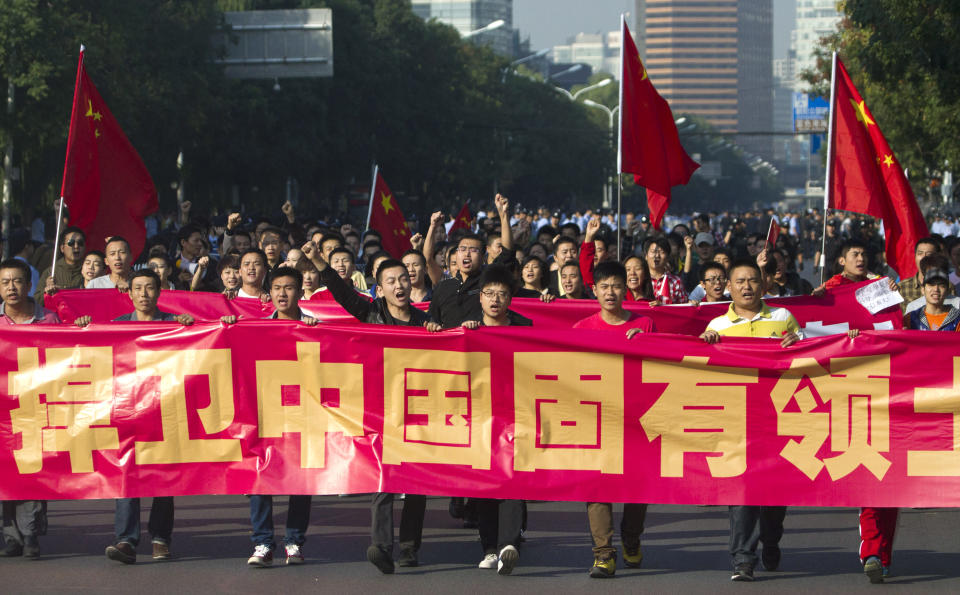

BEIJING (AP) — Chinese are trying to hurt Japan economically for leverage in a bitter dispute over contested islands, turning to angry protests and calls for boycotts of Japanese businesses, abetted in part by China's government.
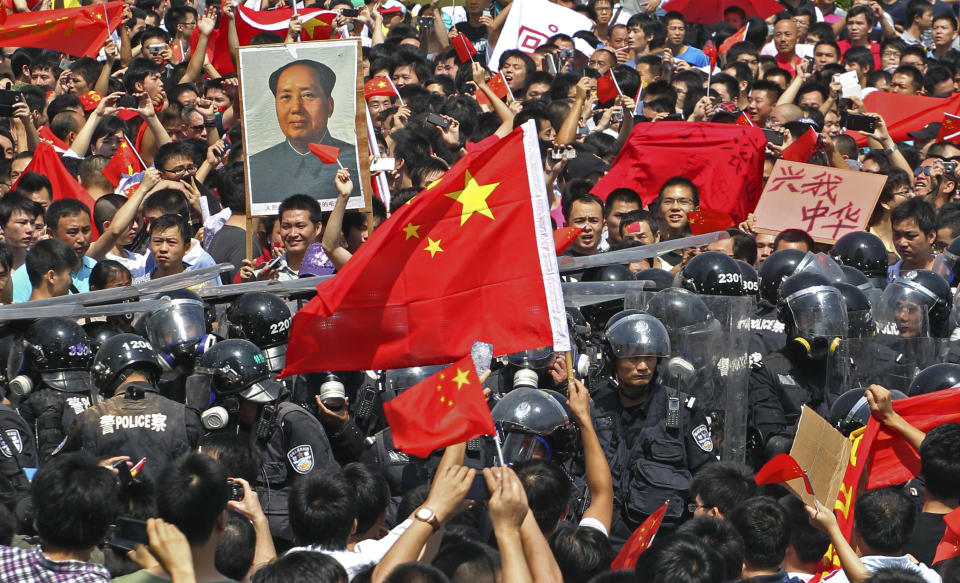
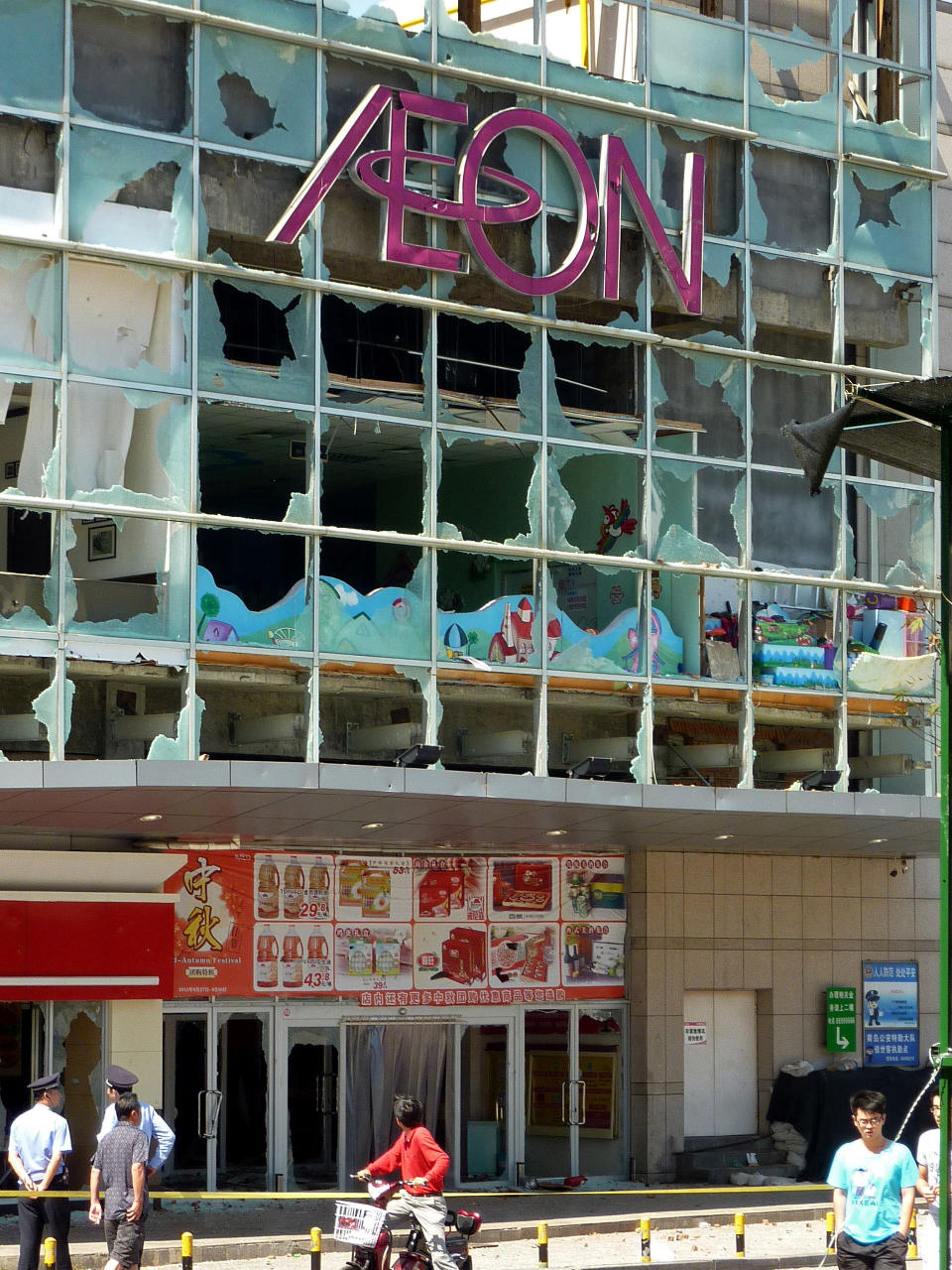
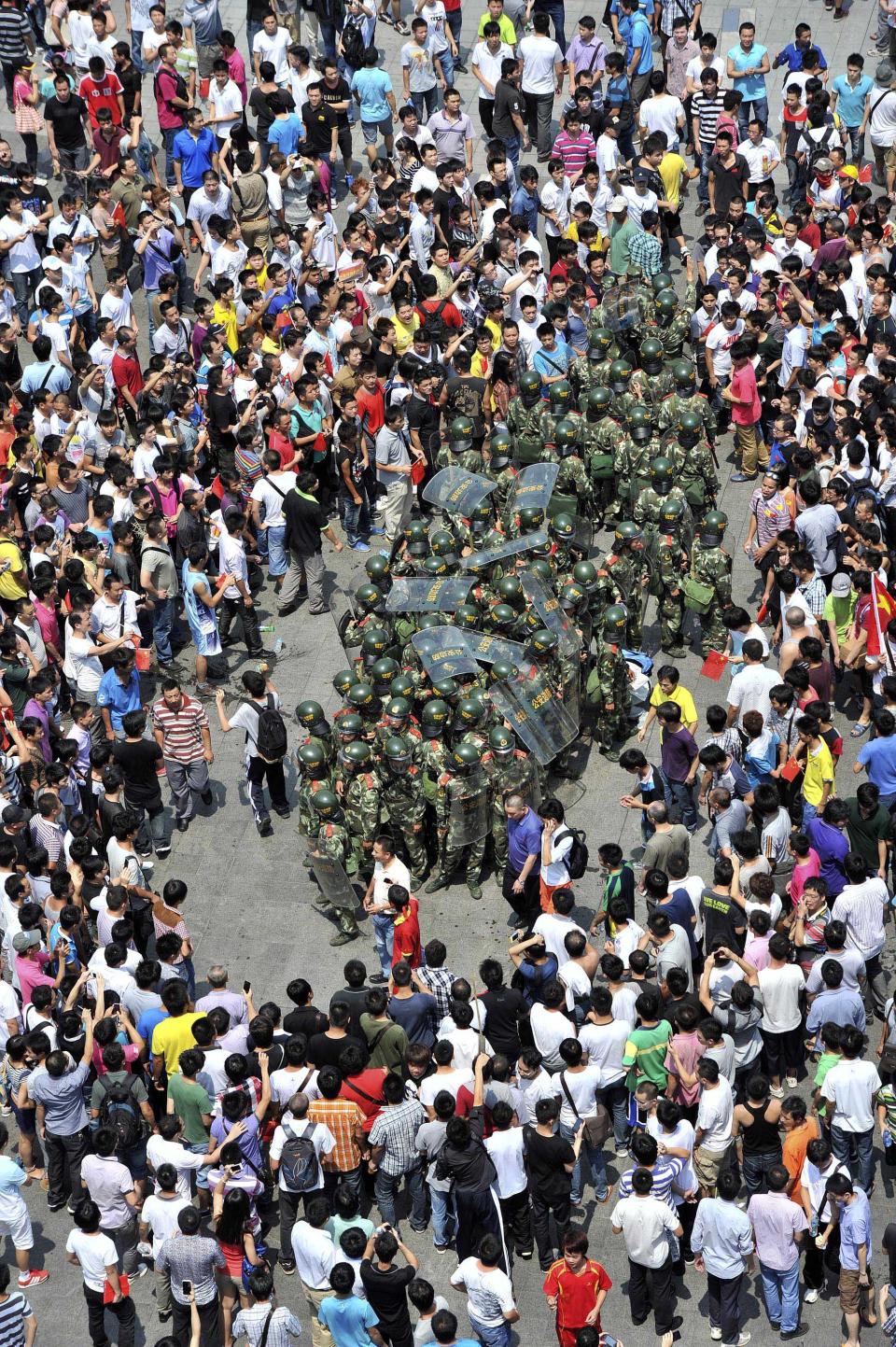
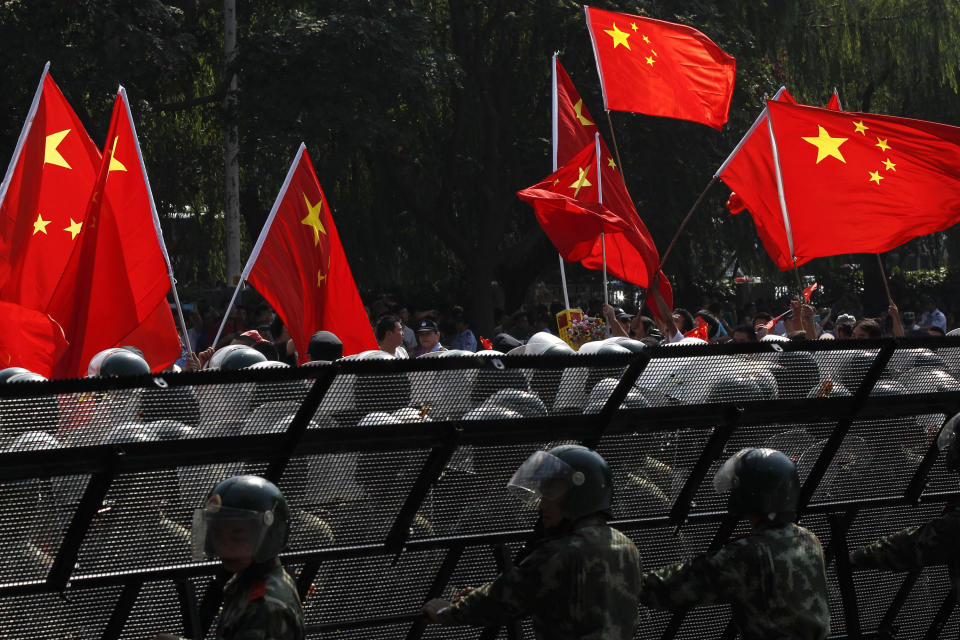
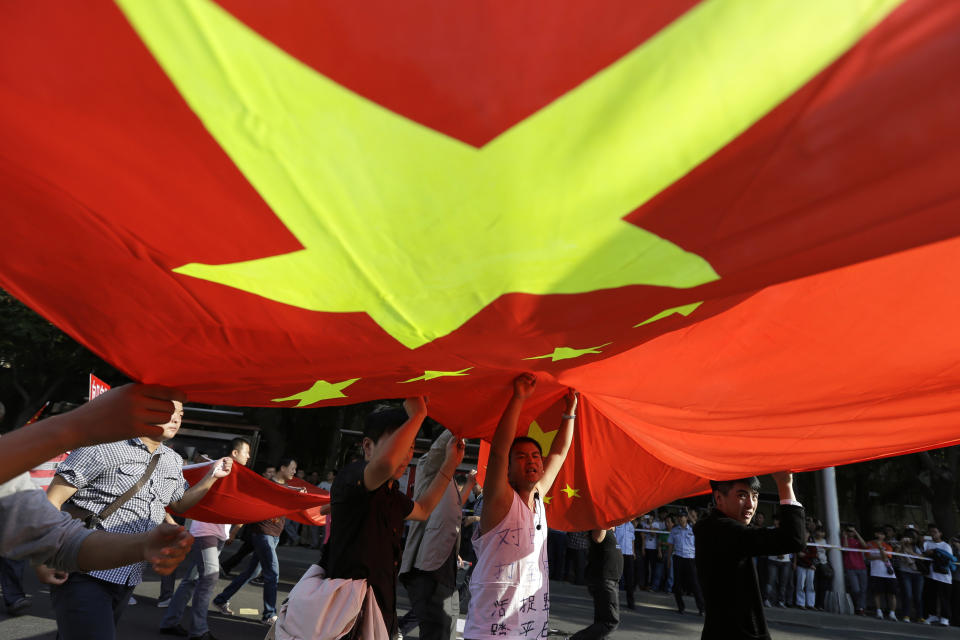
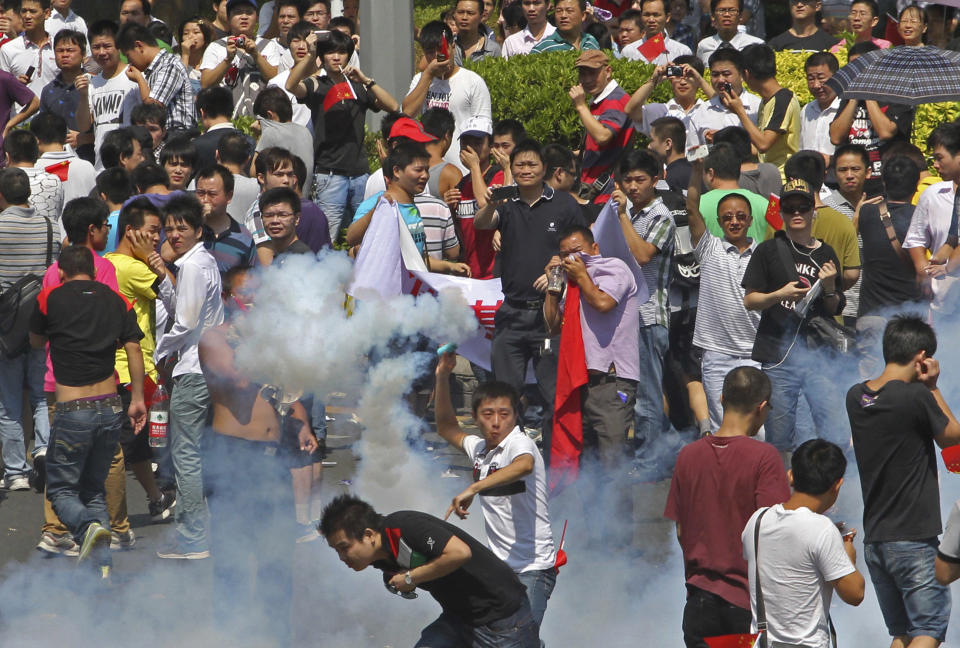
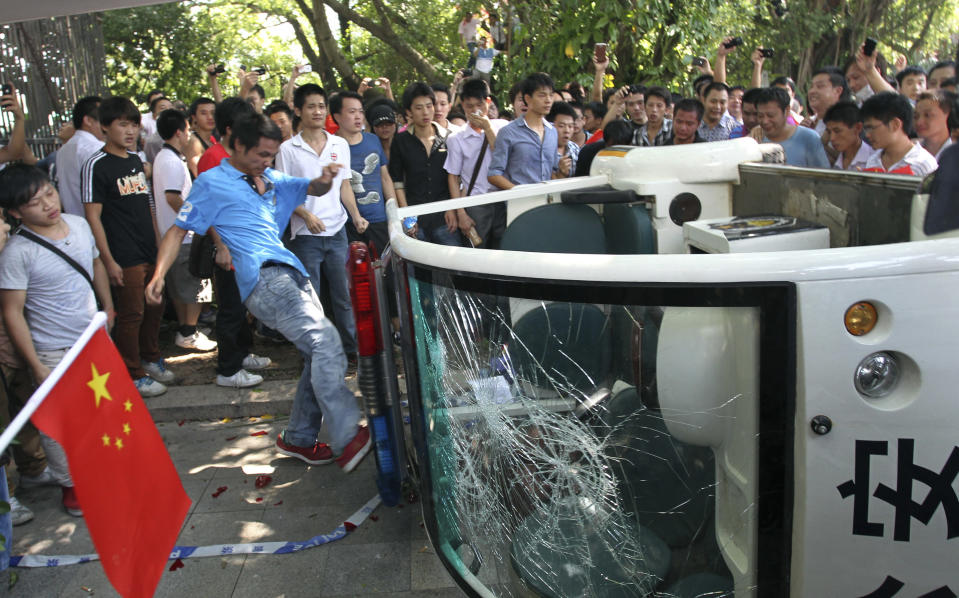
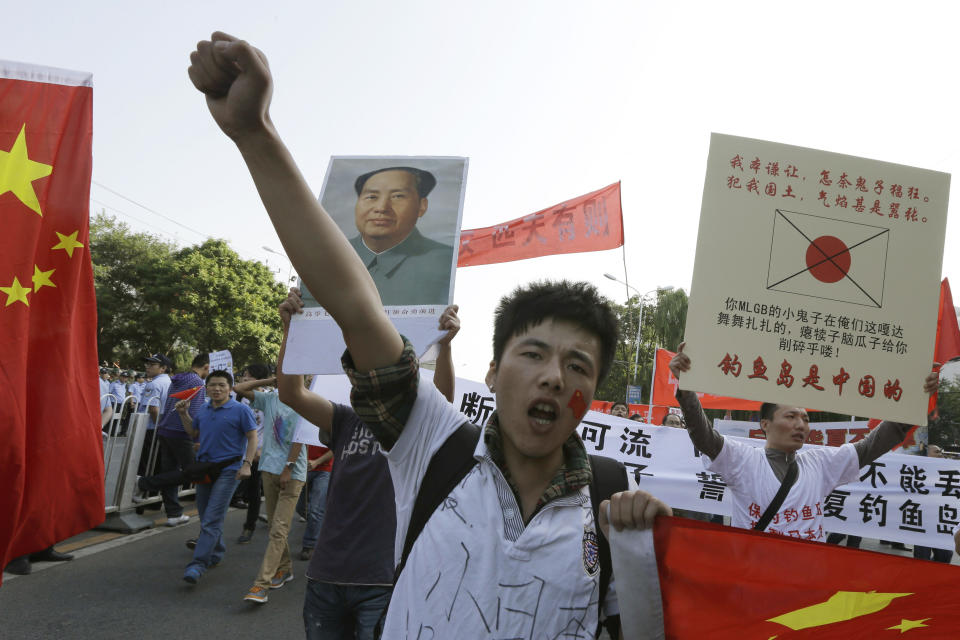
Sporadic protests in China over the past week became larger and at times violent and spread to at least two dozen cities over the weekend. Protesters torched a Panasonic factory and Toyota dealership in the eastern port of Qingdao, looted a Heiwado Co. department store in the southern city of Changsha and ransacked Japanese supermarkets in several cities. Though larger numbers of police imposed more order on demonstrations Sunday, they fired tear gas to subdue rowdy protesters in the southern city of Shenzhen. In nearby Guangzhou city, protesters broke into a hotel that was next to the Japanese Consulate and damaged a Japanese restaurant inside.
Japan has demanded that China ensure the safety of Japanese citizens and businesses. "Unfortunately, this is an issue that is impacting the safety of our citizens and causing damage to the property of Japanese businesses," Japanese Prime Minister Yoshihiko Noda told NHK, Japan's public broadcaster, on Sunday.
U.S. Defense Secretary Leon Panetta said Sunday he is concerned that island disputes in the Asia-Pacific region could spark provocations and result in violence that could involve other nations, such as the United States.
While it urged protesters not to resort to violence, China's government has also encouraged the use of economic pressure in the dispute over Japan's control over the East China Sea islands, called Senkaku in Japan and Diaoyu in China. China's National Tourism Administration ordered travel companies last week to cancel tours to Japan over the weeklong National Day holiday in early October and promised to compensate any businesses for costs they could not recover, said a lawyer who saw the written order and asked not to be identified because the document is not for public use.
The scale and violence are the worst in recurring waves of anti-Japanese protests since 2005, when lingering grievances over Japan's occupation of parts of China in the 1930s through World War II brought Chinese into the streets. Since then, China's economy has supplanted Japan's as the world's second largest and its diplomatic clout and military firepower have soared. State broadcaster China Central Television on Sunday showed Chinese naval forces conducting firing drills in the East China Sea, though it did not give a date for the exercises.
Tensions have been growing for months over the East China Sea islands, since a right-wing nationalist Japanese politician vowed to buy them from their private owners to better protect them from Chinese encroachment. When the Japanese government purchased the islands this week to keep them out of the politician's hands, China reacted angrily, sending marine patrol ships inside Japanese-claimed waters around the islands.
State media, which answer to the ruling Communist Party, joined ordinary Chinese in calling for boycotts of Japanese goods. One regional newspaper ran a list of well-known Japanese brands along with calls for a boycott. China Central Television halted advertisements for Japanese products on two of its main channels over the weekend, according to China National Radio.
Nissan President and CEO Carlos Ghosn told reporters in Hong Kong last week that though so far the dispute had not had a discernible impact on sales in China, it might if it degenerates "into something more serious."
Imports from Japan are off 6 percent so far this year compared with the first eight months of last year, according to Chinese government figures.
A manager of a Sony laptop store in Shanghai said fewer people were coming into his shop. "We sold more than 100 last month, while in these 13 days in September, we sold fewer than 10," manager Yan Long said last week. "We all know these products are made in China, but with a Japanese brand, but it's just the way it is."
Calls for boycotts in previous rounds of China-Japan tensions have fizzled, so it's unclear whether this time will be any different. The Japanese and Chinese economies have robust trade and economic ties, and Japan is a major investor, its businesses providing jobs in manufacturing and services. A boycott or trade fight would likely hurt the Chinese economy at a time its growth is rapidly slowing and the Chinese leadership is worried about civil unrest.
At a Guomei electronics store in Beijing — teeming with flat-screen TVs, cameras and stereo systems — consumers seemed divided. "We should ban their products," fumed 70-year-old former soldier Sun Zhiyi as he left the store. "Japan's ambition is growing bigger and bigger. Our government is too weak."
Others, however, praised Japanese products for their good value. "Their quality is good and I will still buy them," said 20-year-old bank clerk Yu Jinsheng, shopping for a camera.
In 2010, China temporarily stopped exports to Japan of rare earth metals used in high-tech manufacturing after Japan arrested a fishing boat captain whose trawler collided with two Japanese patrol boats off the islands.
China could also threaten Japan with sanctions like it did with the United States in 2010 over Taiwan or cancel trade delegations, but this is unlikely because it could have a detrimental effect on trade relations, said Sarah McDowall, a London-based senior Asia-Pacific analyst at IHS.
"They need each other," she said.
Beijing is treading a careful line, wanting to pressure Japan over the islands and appear a staunch defender of Chinese national interests, without encouraging violence. Protesters in Beijing and several other cities carried portraits of Chinese revolutionary leader Mao Zedong. Though the current leaders use Mao as a rallying symbol, his radical policies have been abandoned and so carrying his poster is a safe, backhanded way of criticizing the government.
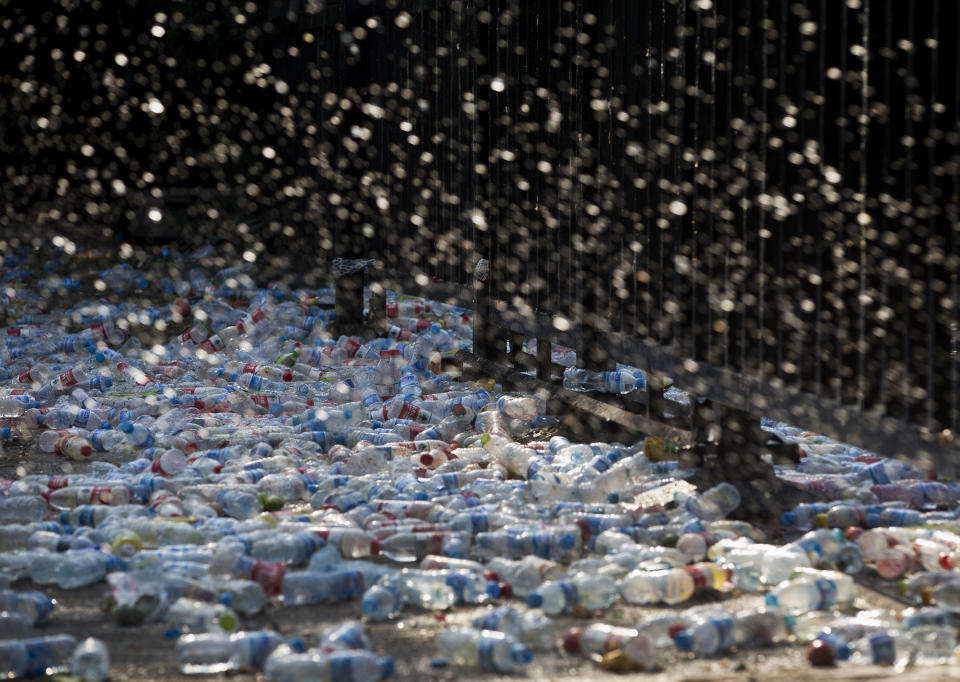
On Saturday, protesters in Beijing numbered in the thousands and nearly breached a metal retaining wall in front of the Japanese Embassy. On Sunday, security personnel outnumbered the protesters, who threw water bottles, bananas, tomatoes and eggs at the embassy and chanted slogans.
State media appealed for people to be "rational" on Sunday, in contrast to their more combative language last week. "The expression of patriotic feelings should not come at the cost of disrupting domestic social order," Xinhua wrote in a commentary.
Censors also stepped up their policing of social media to prevent news of protests from spreading. Users of China's popular Twitter-like Sina Weibo site couldn't search for the term "anti-Japan protests" on Sunday and videos of protests once posted quickly disappeared.
Further complicating matters, Japan's newly appointed ambassador to China, Shinichi Nishimiya, died Sunday, three days after collapsing near his home in Tokyo. No official cause of death was released. He had been appointed ambassador on Tuesday, and was to assume his new post next month.
___
Associated Press television producer Aritz Parra, reporter Charles Hutzler and researchers Henry Hou and Flora Ji in Beijing, reporter Eric Talmadge in Tokyo, and photographer Eugene Hoshiko and researcher Fu Ting in Shanghai contributed to this report.
___
Follow Louise Watt on Twitter at www.twitter.com/louise_watt
