China, US political campaigns show stark contrasts
BEIJING (AP) — The world's two biggest economies are entering the final stages of political campaigns to pick their national leaders. But that's where similarities in the politics of the United States and China end.
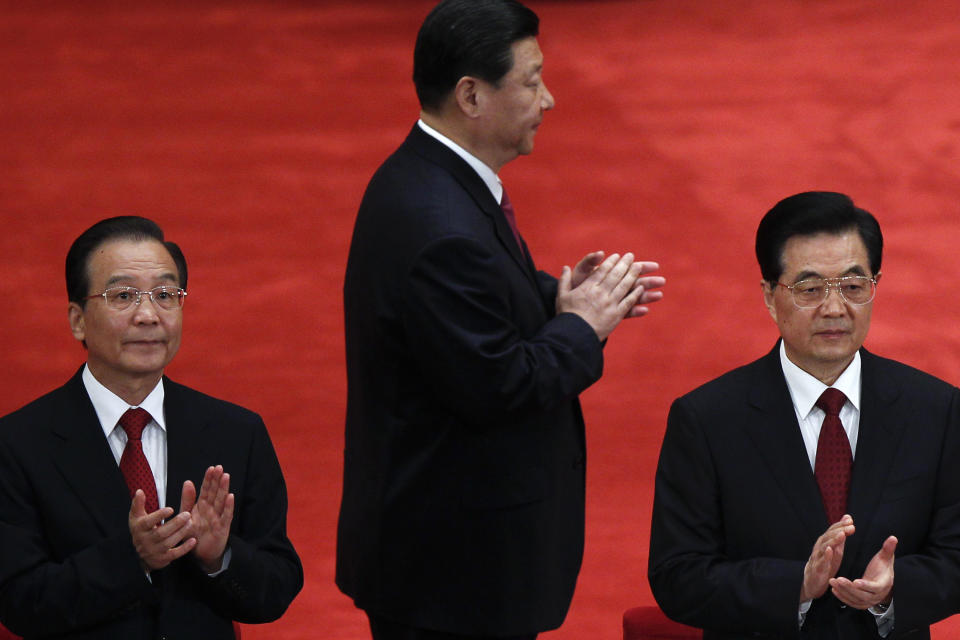
While American candidates wage loud, rah-rah campaigns with a clear timetable as they head toward the Nov. 6 presidential election, China hasn't even announced the date for this fall's Communist Party congress that will appoint the next top leader to replace outgoing Hu Jintao — a post widely expected to go to Vice President Xi Jinping.
And while the U.S. process is an election decided by voters, it's not conclusively known how China's ruling party picks its leaders, including members of the inner sanctum: the all-powerful, nine-member Politburo Standing Committee.
The massive gap between Chinese and U.S. political culture underlines how successfully leaders in Beijing have resisted calls to liberalize their closed system. Sixty-three years after seizing power in a violent revolution, the Communist Party has seen off all challengers, including some among the urban middle class now agitating for greater civil and political rights.
Over the past year, an unprecedented number of Chinese sought to run independently for seats in local people's congresses, the Chinese equivalent of a city or state assembly. Most were barred from even registering, waylaid by bureaucratic excuses and then threatened and harassed at home and work.
Many had sought to publicize their campaigns online, but Beijing monitors the Internet relentlessly for political challenges. In contrast, the net has been a game changer in the U.S. politics, both for fundraising and getting the message out. Attack ads are also common online, and some U.S. politicians may wish they had China's ability to adroitly delete content deemed politically sensitive.
For the first time in recent decades, cycles have aligned so that the leadership decisions are happening in the two countries at roughly the same time.
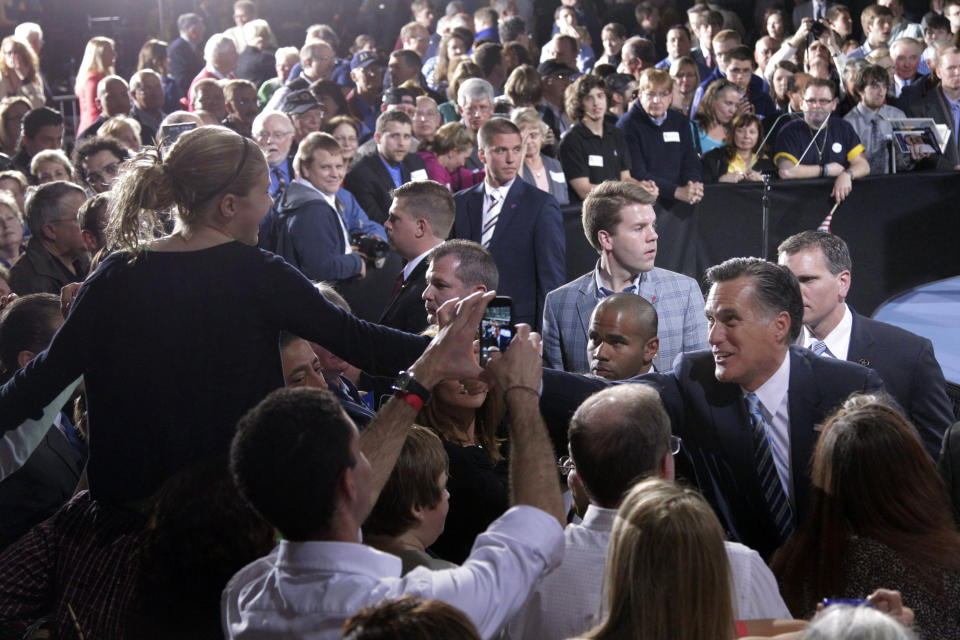
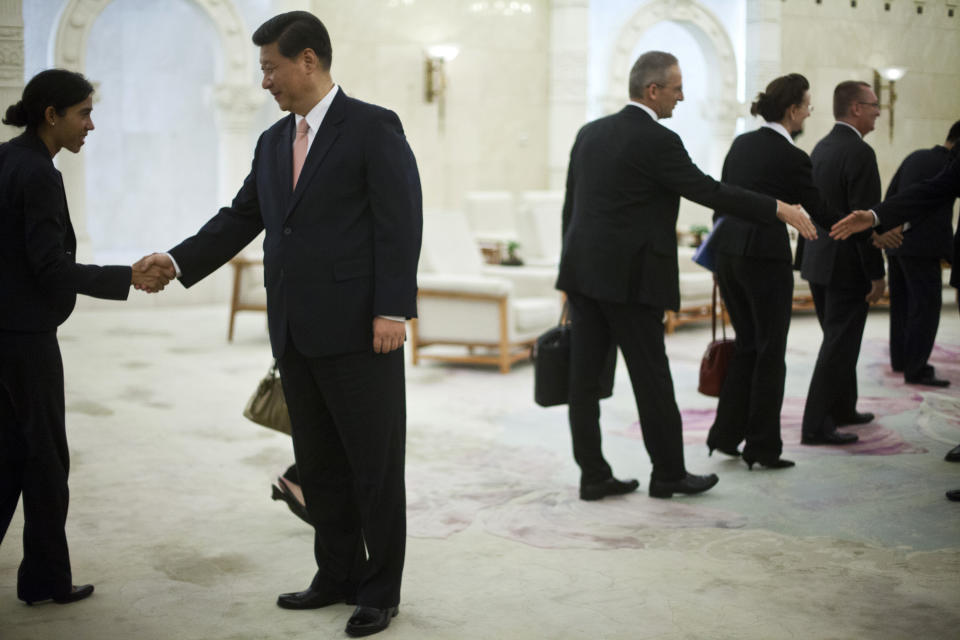
But while U.S. candidates ricochet from one electoral appearance to the next, delivering speeches, shaking hands and kissing babies, China's future leaders are rarely seen outside of tightly scripted official appearances. In recent weeks, they haven't been seen at all, as part of an arcane communist tradition that sends them to a leadership retreat for about a month.
"The U.S. public can participate, they can criticize, they can vote. Over here all we can do is watch TV," said Li Fan, who promotes grass-roots democracy through his private, Beijing-based The World and China Institute.
The contrasts are especially striking in the mass media.
American TV broadcasts are festooned with up-to-the-minute ads produced at lightning speed to keep up with a 24-hour news cycle and often designed for shock value. Only hours after President Barack Obama declared that "the private sector is doing fine" in June, his opponents ran an ad mocking him as out of touch.
In China, the party runs turgid spots about farmers or factory workers and their breakthroughs in machine-assisted production and other deeds accomplished under the party's leadership. Lately, state media has revived a campaign to glorify a former soldier, Lei Feng, who became an everyman hero after he died on the job a full half-century ago.
While the U.S. does retail politics, with parties serving up several versions of their vision to cater to targeted constituencies, China's politics might better be described as wholesale: a drab and monolithic package that is the same for everyone.
Not surprisingly, the Chinese public is far less engaged. "Outside of the academics and those of us in the think tanks, it's difficult to find citizens who care much at all about what the party does," Li said.
China has settled into a system of turning over its top leaders about every decade in an evolving process that stresses collegial — albeit secretive — decision-making as a way of avoiding the strongman rule of its turbulent past. The Communist Party has never spelled out exactly how the transition works, but it gives signals about the leadership at the party congresses held every five years.
It is widely understood that Xi and Vice Premier Li Keqiang will end up on the Standing Committee again and become China's next two top leaders, partly because they were the only politicians named to the panel five years ago who were young enough to be below retirement age for this year's transition. But even that widely held belief won't be confirmed in state media.
And Chinese people can only speculate privately on who else will join the top lineup.
While Obama and his Republican rival Mitt Romney are seen daily, shirt sleeves rolled up, verbally sparring around the country for the four-year presidential term, the run-up to this fall's transition in China takes place behind closed doors.
The endgame formally got under way this week with the announcement of 2,270 carefully vetted delegates who will attend the party congress. Their chief task will be to select a Central Committee of about 200 members. That committee in turn picks the 25-member Politburo and its Standing Committee — though the positions are believed decided in behind-the-scenes negotiations rather than in a direct vote.
Going by the last congress in 2007, this year's meeting should take place around mid-October, but it could be slightly earlier or a few weeks later.
The deputy chief of the party's Organization Department declined to say at a recent news conference when the congress would proceed. Wang Jingqing merely reiterated that it would take place in the second half of the year and said not even he knew whether the Standing Committee would remain at nine or be cut to seven members as has been speculated.
The insularity of the Chinese system has been displayed by the near-total absence of top leaders from Beijing since the end of July when they moved to the coastal resort of Beidaihe for holidays and informal meetings intended to finalize the leadership roster. The U.S. has no equivalent of China's nine-man ruling clique, but it would be unthinkable for the most powerful people in Washington to disappear from public view for even a week.
In the U.S., election campaigning was open to all comers and started informally years ago. It began in earnest in recent months with Republican primaries. Many voters may be tired of the process by the time it ends, even if the outcome — unlike in China — is far from certain.
China's future leaders undergo no such open competitive process, because they are picked by a small circle of top officials whose decisions are later confirmed in "nominal procedures," said Yang Fengchun, of Peking University's School of Government.
In China, "there are no elections in the general sense, though the word election has been used," Yang said. "You can't compare the two systems."
