Fishermen blast premier dive sites off Indonesia
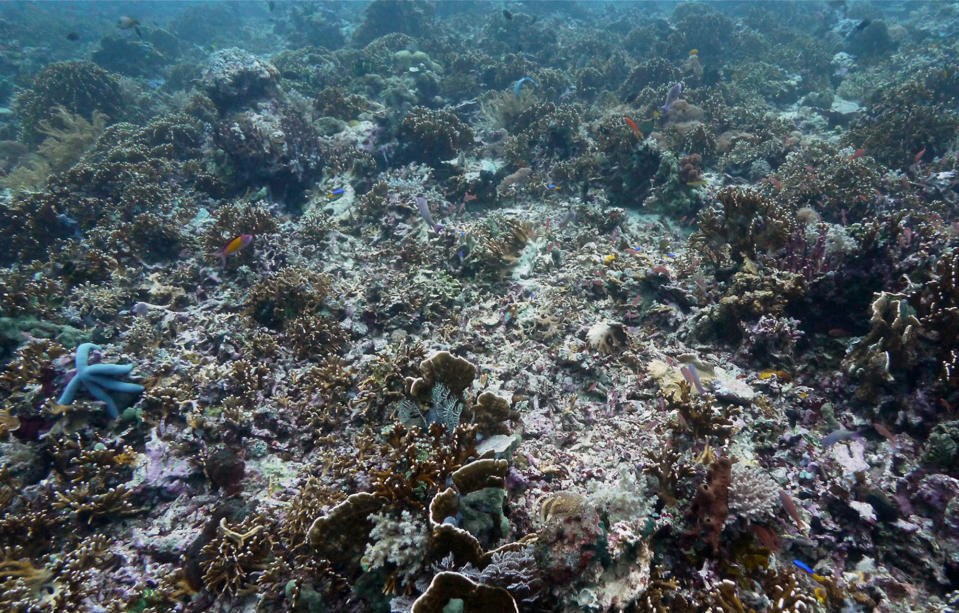
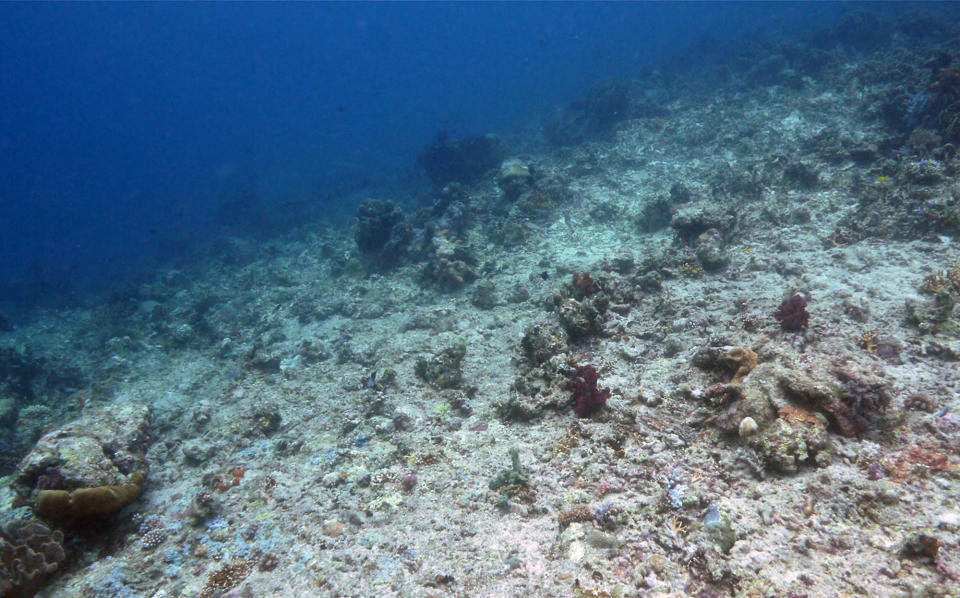
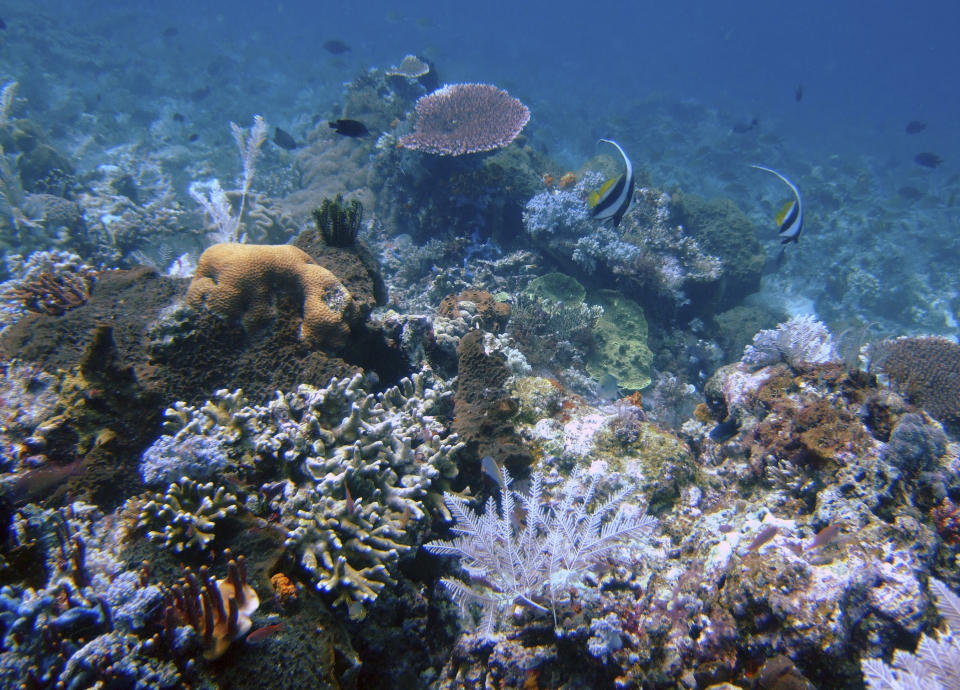
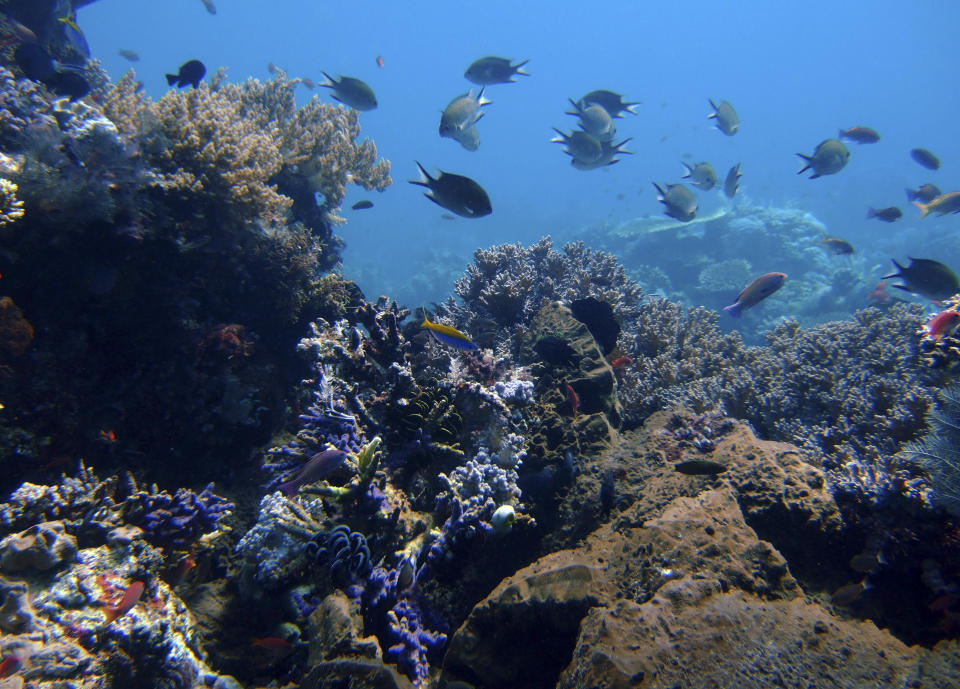
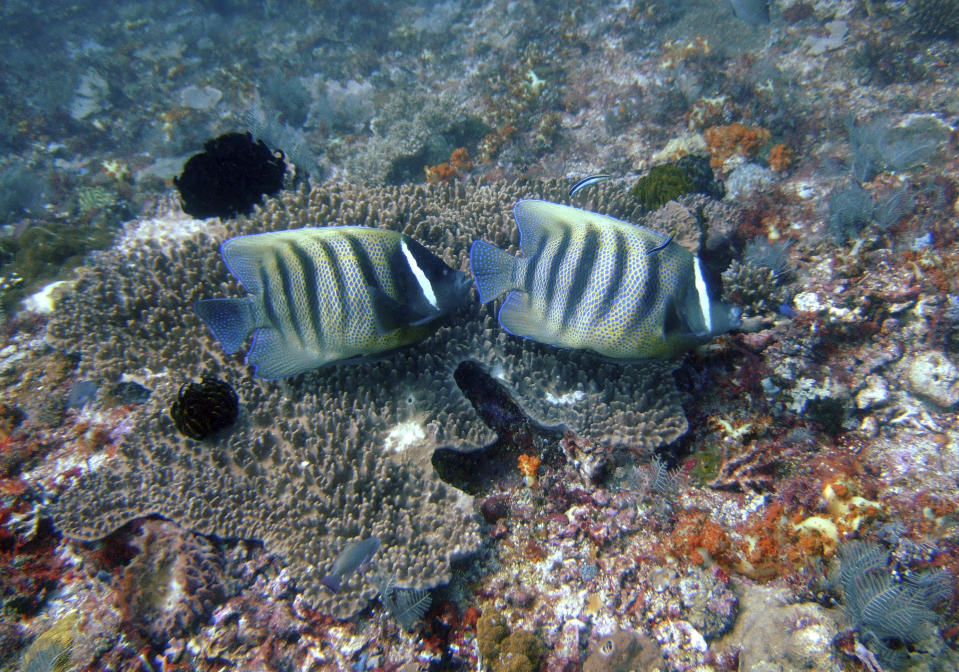
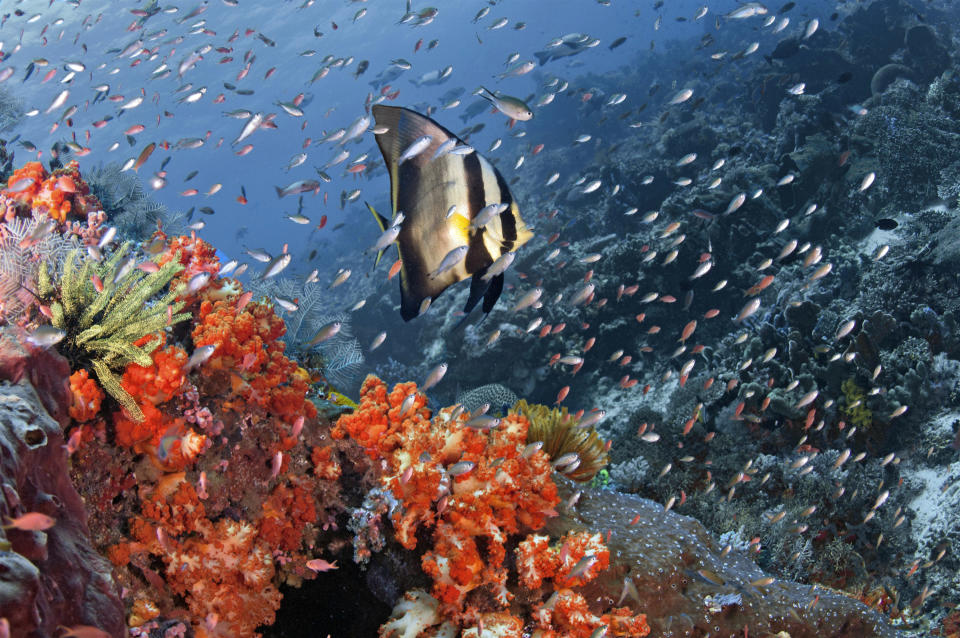
KOMODO ISLAND, Indonesia (AP) — Coral gardens that were among Asia's most spectacular, teeming with colorful sea life just a few months ago, have been transformed into desolate gray moonscapes by illegal fishermen who use explosives or cyanide to kill or stun their prey.
The site is among several to have been hit inside Komodo National Park, a 500,000-acre reserve in eastern Indonesia that spans several dusty, tan-colored volcanic islands. The area is most famous for its Komodo dragons — the world's largest lizards — and its remote and hard-to-reach waters also burst with staggering levels of diversity, from corals in fluorescent reds and yellows to octopuses with lime-green banded eyes to black-and-blue sea snakes.
Dive operators and conservationists say Indonesia's government is not doing enough to keep illegal fishermen out of the boundaries of the national park, a U.N. World Heritage site. They say enforcement declined greatly following the exit two years ago of a U.S.-based environmental group that helped fight destructive fishing practices.
Local officials disagree, pointing to dozens of arrests and several deadly gunbattles with suspects.
Michael Ishak, a scuba instructor and professional underwater photographer who has made hundreds of trips to the area, said he's seen more illegal fishermen than ever this year.
The pictures, he said, speak for themselves.
When Ishak returned last month to one of his favorite spots, Tatawa Besar, known for its colorful clouds of damselfish, basslets and hawksbill sea turtles, he found that a 500-square-meter (600-square-yard) section of the reef had been obliterated.
Many smaller patches were destroyed elsewhere at the site.
"At first I thought, 'This can't be right. I must have jumped in the wrong place,'" he said, adding he swam back and forth to make sure he hadn't made a mistake. "But it was true. All the hard coral had just been blasted, ripped off, turned upside down. Some of it was still alive. I've never seen anything like it."
The national park's corals are supposed to be protected, but fishermen are drawn there by locally popular fish like fusiliers and high-value export species like groupers and snappers.
Fishermen can be seen in small wooden boats, some using traditional nets or lines. Others are blasting sites with "bombs" — fertilizer and kerosene mixed in beer bottles. Breathing through tubes connected to air compressors at the surface, young men plunge to the bottom and use squeeze bottles to squirt cyanide into the coral to stun and capture fish.
Dive operators are increasingly seeing dead fish on the sea floor or floating on the surface.
"The biggest problem is that fishermen seem to be free to come into Komodo, completely ignoring the zoning and resource use regulations," said Jos Pet, a fisheries scientist who has worked with numerous marine conservation groups in the area in recent years.
He said they are "quite simply fishing empty this World Heritage Site."
Sustyo Iriyono, the head of the park, said problems are being exaggerated and denied claims of lax enforcement.
He said rangers have arrested more than 60 fishermen over the past two years, including a group of young men captured last month after they were seen bombing fish in waters in the western part of the park.
One of the suspects was shot and killed after the fishermen tried to escape by throwing fish bombs at the rangers, Iriyono said. Three others, including a 13-year-old, were slightly injured.
"You see?" said Iriyono. "No one can say I'm not acting firmly against those who are destroying the dive spots!"
He added that the park is one of the few places where fish bombing is monitored with any regularity in Indonesia, a Southeast Asian nation of more than 17,000 islands.
Divers, however, say enforcement has dropped dramatically since 2010, when the government reclaimed sole control of operations.
For two decades before that, The Nature Conservancy, a U.S.-based nonprofit, had helped the government confront destructive fishing practices there. "No-take zones" were created, protecting spawning areas, and coastal areas also were put off limits.
Patrols using park rangers, navy personnel and local police were key to enforcement.
In 2005, the government gave a 30-year permit to Putri Naga Komodo, a nonprofit joint venture company partially funded by The Nature Conservancy and the World Bank to operate tourist facilities in hopes of eventually making the park financially self-sustaining.
Entrance and conservation fees — just a few dollars at the time — went up several tenfold for foreign tourists. With around 30,000 local and international visitors annually at the time, that would have given the park a budget of well over $1 million, but outraged government officials demanded that the funds go directly into the state budget. The deal collapsed in 2010, when Putri Naga Komodo's permit was yanked.
"They had no right to directly collect the entrance fees from the tourists," said Novianto Bambang, a Forestry Ministry official.
Dive operators and underwater photographers have asked The Nature Conservancy and similar organizations like WWF Indonesia, to return to Komodo and help with conservation efforts there.
Nature Conservancy representative Arwandridja Rukma did not address that possibility, saying even though it was heartwarming to see so much concern about this "national treasure," it only takes part in projects at the invitation of the government.
