Governors put off health care questions, for now

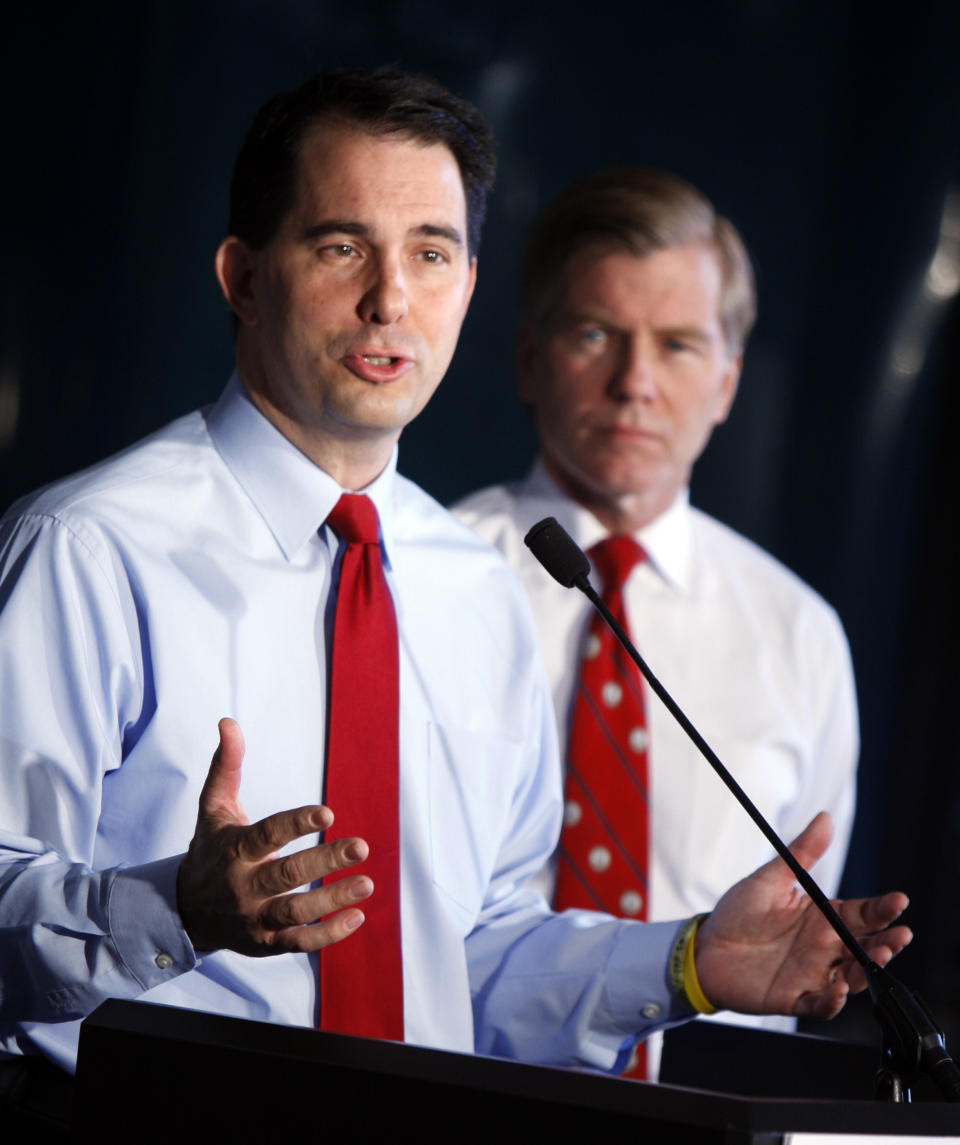
WILLIAMSBURG, Va. (AP) — Millions of uninsured people may have to wait until after Election Day to find out if and how they can get coverage through President Barack Obama's health care law.
More than two weeks after the Supreme Court gave the green light to Obama's signature legislative achievement, many governors from both parties said they haven't decided how their states will proceed on two parts under their control: an expansion of Medicaid, expected to extend coverage to roughly 15 million low-income people, and new insurance exchanges, projected to help an additional 15 million or so purchase private insurance.
In some states, such as Colorado, Oklahoma and Wyoming, governors said they're crunching the numbers to determine what's best for their residents. But in other states, including Virginia, Nebraska and Wisconsin, Republican governors said not to expect a decision before Obama and Republican challenger Mitt Romney square off in November.
If Romney wins, the argument goes, he'll work to throw out the health care overhaul, and the issue will be moot.
"I don't think I can look the taxpayers of Virginia in the eye and say I'm going to spend a lot of your money building exchanges that four months from now I may not need," Gov. Bob McDonnell, R-Va., said on the sidelines of the National Governors Association meeting.
Although the high court upheld the requirement that individuals either have insurance or pay a fine, the justices undercut Obama's plan to get almost all Americans insured, ruling that states can opt out of the expansion of Medicaid, the government-run insurance plan. People earning up to 138 percent of the federal poverty level qualify for Medicaid under the health care law, except in states that reject the expansion.
The Obama administration said last week that people won't be fined for not having insurance in states that turn down the expansion, meaning Obama's hard-fought overhaul could fall far short of the 30 million or more uninsured he had hoped would get coverage.
Also left to the governors is what to do about the exchanges — Internet-based markets designed to offer one-stop shopping for insurance — that are also part of law. States are supposed to set up their own exchanges, but if they don't, the federal government will run them instead.
About a half-dozen states have announced plans to forgo the Medicaid expansion and relinquish the massive infusion of federal dollars that would come along with it. All have Republican governors, many of whom argued Medicaid is an underfunded entitlement already weighing down their cash-strapped budgets.
Others faulted the Obama administration for failing to provide the specifics that states need to make an informed decision. That sentiment was echoed in a list of 30 questions about the law that the Republican Governors Association sent Obama last week.
The law picks up the entire cost of covering more people for the first three years, and then drops to 90 percent, with states covering the remaining 10 percent. It's a great deal, proponents argue, especially compared to the current Medicaid rates, wherein Washington pays as little as half of the cost in some states.
But a handful of GOP governors attending the NGA meeting said they suspected a bait-and-switch in which states would agree to the expansion only to see Congress cut some or all of the funds, leaving governors on the hook and potentially bankrupting state budgets.
"At any whim they could just pull the money," Arizona Gov. Jan Brewer told The Associated Press. "So yeah, I'm a little gun-shy."
Wisconsin Gov. Scott Walker, who survived a recall election in June, said in an interview that governors were grumbling among themselves about the federal government's track record on special education. Congress in 1975 pledged to fund 40 percent of the cost of special education, but routinely has fallen far short of that commitment.
The politics are tricky for governors weighing how to proceed. Just one-third of Americans supported the health care overhaul in Associated Press-GfK poll conducted in mid-June. But because federal tax dollars are covering the Medicaid expansion, states that opt out are essentially consigning their residents to subsidize coverage for those in other states.
Also, Alabama, Pennsylvania, Utah and other states that are still weighing their options were among those that sued the federal government in an attempt to have the law overturned. If they were so opposed then, the law's supporters ask, why are they leaving the door open to implementing it now?
Both the Medicaid expansion and the exchanges don't kick in until 2014, meaning states technically have some breathing room before they need to make a final decision. But governors who've agreed to take the expansion accused their more taciturn colleagues of playing election-year politics at the expense of taxpayers.
"It's not only irresponsible, it's disingenuous," Vermont Gov. Peter Shumlin said at a news conference organized by Democratic governors. "To say 'I'm going to criticize the plan, but I won't tell you whether I'm taking the loot until after the election,' that's what breeds cynicism in the American people."
Shumlin didn't back down even when reminded that some Democrats too are taking the wait-and-see approach, including Colorado Gov. John Hickenlooper.
"I believe my comments should apply to every governor in the nation, on a bipartisan basis," Shumlin said.
___
Reach Josh Lederman on Twitter at http://twitter.com/joshledermanAP
