Iraqis wait to see gains from country's oil boom

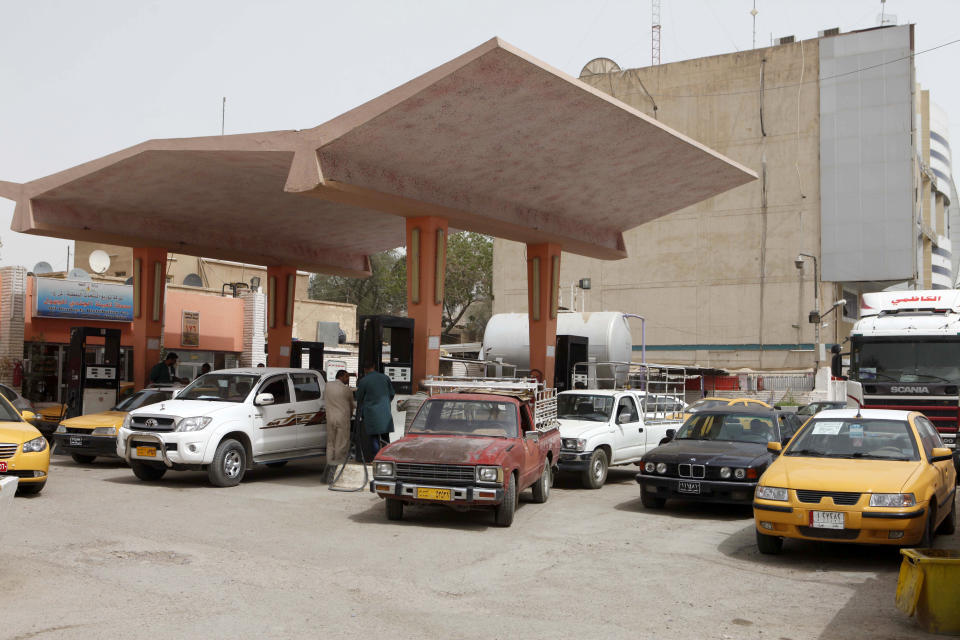
BAGHDAD (AP) — Iraq is fast becoming an oil producing powerhouse, but you'd never know that by looking at the faded Unknown Soldier gas station in downtown Baghdad. There's no repair garage or mini-mart, just a cramped office with tattered vinyl couches. Horns blare as a string of waiting cars backs up into busy Sadoun Street, slowing traffic.
Electricity from the power grid is available only for a few hours a day, so a noisy generator burns through 200 liters (53 gallons) of fuel daily just to keep the lights on and pumps running. That eats into what little profit is left over after government-imposed price caps, says manager Anmar Abdul-Sattar.
Like many Iraqis, he sees little reason to celebrate the postwar petroleum gains that have turned Iraq into a leading oil producer. "The country is increasing its oil revenues, but we're not feeling it on the ground," he said.
It's a widely shared sentiment. Frequent power cuts, the state's inability to prevent near-daily bloodshed and yawning gaps in basic services have left ordinary Iraqis convinced they are sharing little in the country's growing oil wealth. Insurgent attacks have killed more than 200 people just since the start of this month.
"There is no electricity, no public services. No respect for the people of Iraq," Mohammed Salem said as he gassed up his taxi at the station, which is named after a monument that once stood nearby. The billions being made off Iraq's oil, Salem believes, are simply "being stolen by government officials and sent to banks outside of Iraq."
Iraq last month crept into second place behind Saudi Arabia among OPEC's top oil exporters, according to the latest figures from the International Energy Agency. The shift marks a symbolic victory over neighboring Iran, long the bloc's No. 2.
The rise stems from a steady increase in Iraqi output and the effect of international sanctions that are crimping Iran's ability to market its own crude. Foreign oil majors such as Exxon Mobil Corp. and BP PLC have been brought in to develop Iraq's vast oil fields, and new export facilities are coming online.
The architect of Iraq's postwar energy policy, Deputy Prime Minister for Energy Hussain al-Shahristani, is proud of the country's achievement. He recently boasted that Iraq is now pumping 3.2 million barrels a day, a figure that also puts it ahead of oil-rich Kuwait and the United Arab Emirates.
The difference is that citizens of those nearby countries enjoy income levels, pensions and standards of health care far higher than their Iraqi counterparts. Their modern metropolises — which in the UAE's case host some of the tallest and most innovative buildings in the world — bear little resemblance to crumbling, concrete Baghdad and other strained Iraqi cities.
Embittered Iraqis are acutely aware of the disparity. Many blame not the United States or international oil companies, but a government they see as ineffective and corrupt.
"Go ask the government why we are living like this. It was better under Saddam," said Ahmed Saadi, another driver filling his tank at the gas station, referring to dictator Saddam Hussein, deposed after the American-led invasion in 2003. "They said they were going to distribute the oil money to the people in a fair way. It didn't happen."
Official government figures indicate 11 percent of Iraqis were unemployed at the end of last year, according to Planning Ministry spokesman Abdul-Zahra Hendawi. Another 25 percent are considered underemployed, suggesting they are unable to find steady, full-time jobs that meet their needs. Other Iraqi officials have quoted higher jobless numbers.
The gaps in services are obvious in some of Iraq's poorest areas.
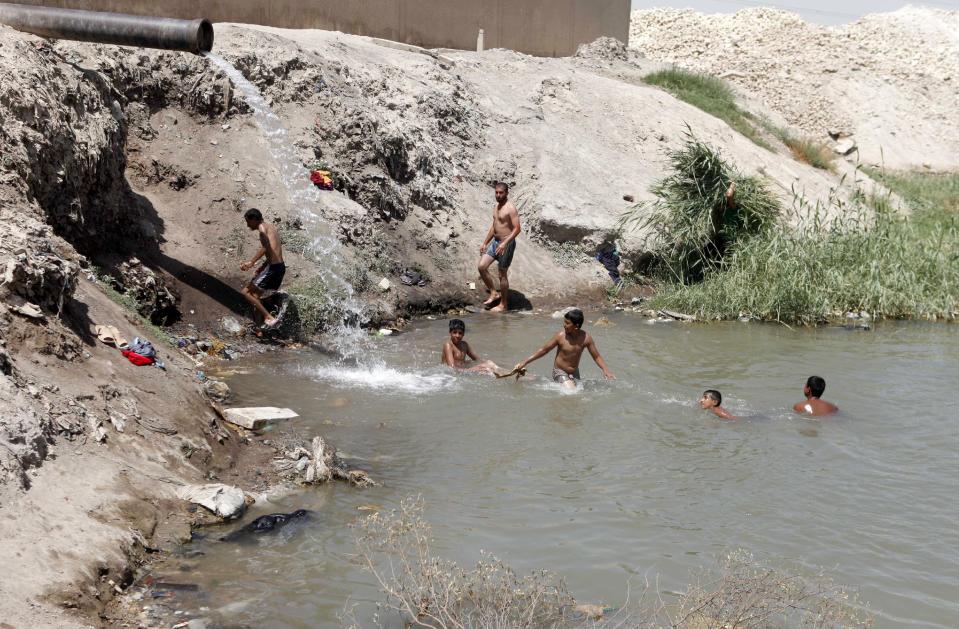
In Hay Tariq, a fast-growing Shiite slum on Baghdad's outskirts, children cool off by swimming in a garbage-filled pond fed by wastewater runoff.
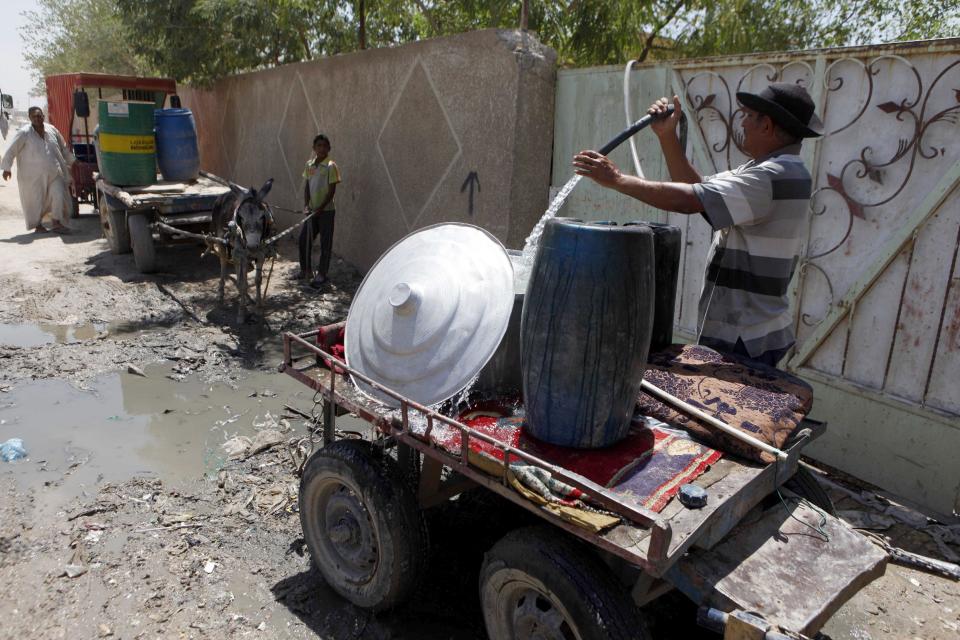
Many residents there lack proper plumbing, so they use donkey-drawn carts to haul plastic containers and even old oil drums to a municipal distribution center to collect fresh water. Resident Hadi Ibrahim said he sometimes has to wait hours before the water gets distributed.
Even in nicer areas, such as the Sunni enclave of Azamiyah, residents say they have yet to see any improvement despite the increase in the flow of oil.
During an interview in his cramped and cracking house there, fishmonger Sadiq Abdul-Jalil al-Obeidi described how old pipes in the neighborhood are clogged and falling apart, causing sewage to mix with drinking water.
The power went out the moment he invited guests inside. It returned, at higher cost, only after a privately owned neighborhood generator kicked in.
He accused Iraqi officials — "the whole government, without any exception" — of pocketing the country's oil revenues. "Human nature is greedy," he added mater-of-factly.
"We're an oil-rich country, so services should be 100 percent perfect. But what we're seeing is the opposite," al-Obeidi said. "There hasn't been a single official who has come forward to serve the people. Even a 5-year-old child can tell you that. They ... only think about their personal ambitions."
Repeated attempts in recent days to reach Iraqi government spokesman Ali al-Dabbagh to discuss the bitter complaints were unsuccessful.
Other government officials, including some whose parties are allied with Prime Minister Nouri al-Maliki, say corruption and wasteful government spending are seriously diminishing any gains increased oil production is bringing to Iraq.
Without better plans to spend the oil revenues, "Iraq will remain another Somalia instead of becoming more like Saudi Arabia or the United Arab Emirates," said Shiite lawmaker Jawad Kadim al-Hassnawi, a member in the services and construction committee in the parliament.
"The whole service system will totally collapse soon if the government continues to act in such an aimless way," he warned.
Salem, the taxi driver filling up in downtown Baghdad, is even more pessimistic.
"It's totally impossible," he said when asked if Iraq's standard of living can one day hope to rival that of other regional OPEC countries, such as Saudi Arabia and Kuwait. "We'd need Aladdin's magic lamp for that!"
___
Associated Press writers Sameer N. Yacoub and Sinan Salaheddin contributed reporting.
