JPMorgan traders may have sought to conceal losses
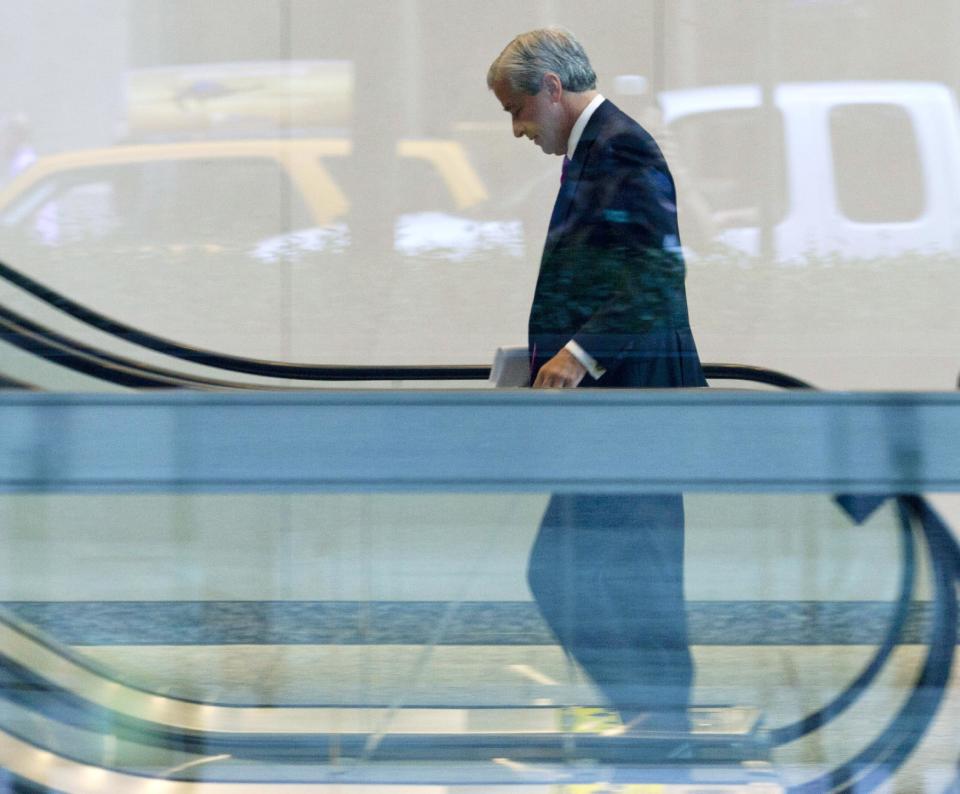
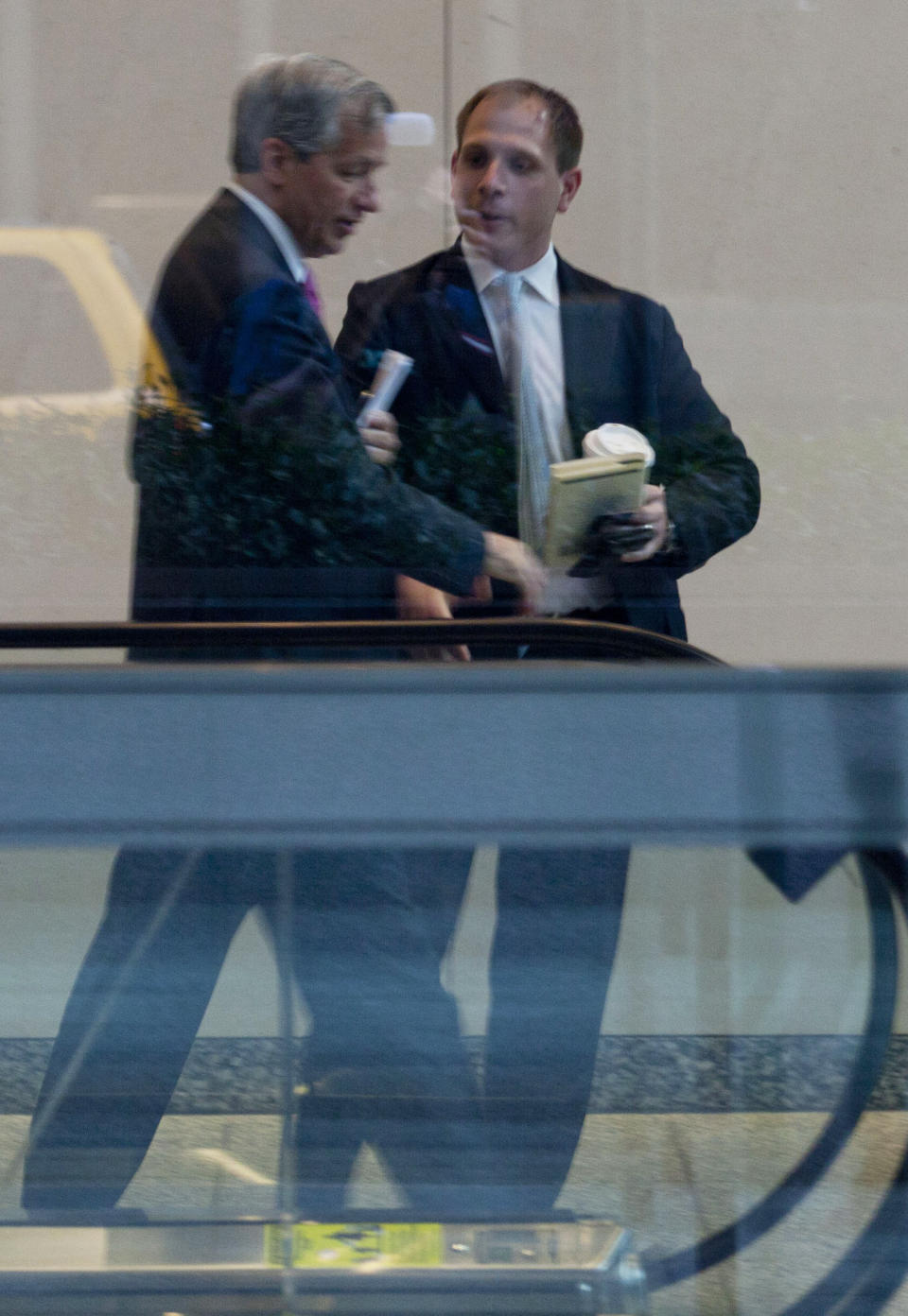
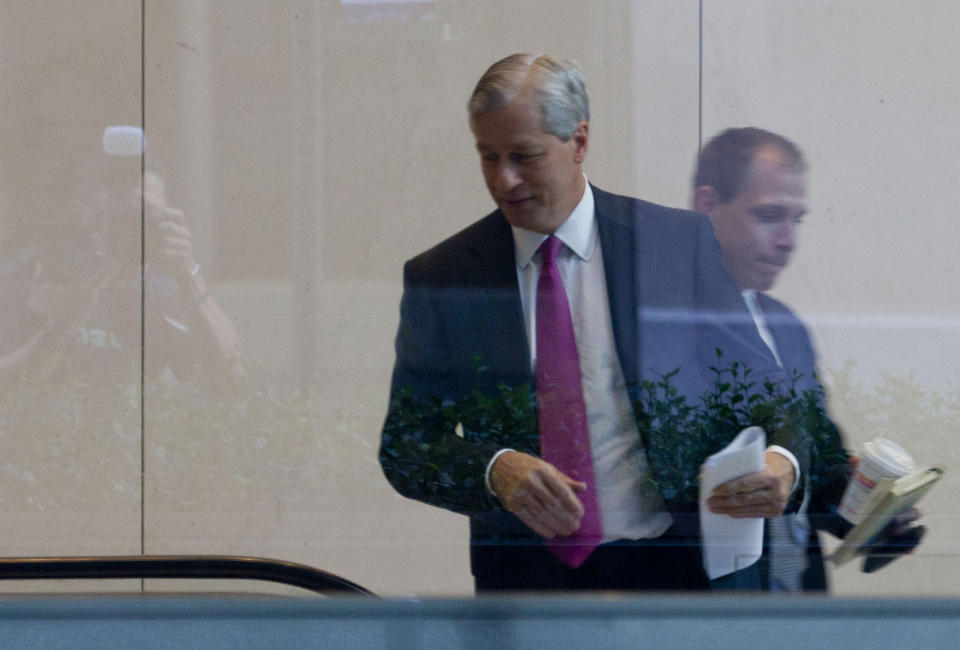
NEW YORK (AP) — JPMorgan Chase said Friday that its traders may have tried to conceal the losses from a soured bet that has embarrassed the bank and cost it almost $6 billion — far more than its CEO first suggested.
The bank said an internal investigation had uncovered evidence that led executives to "question the integrity" of the values, or marks, that traders assigned to their trades.
JPMorgan also said that it planned to revoke two years' worth of pay from some of the senior managers involved in the bad bet, and that it had closed the division of the bank responsible for the mistake.
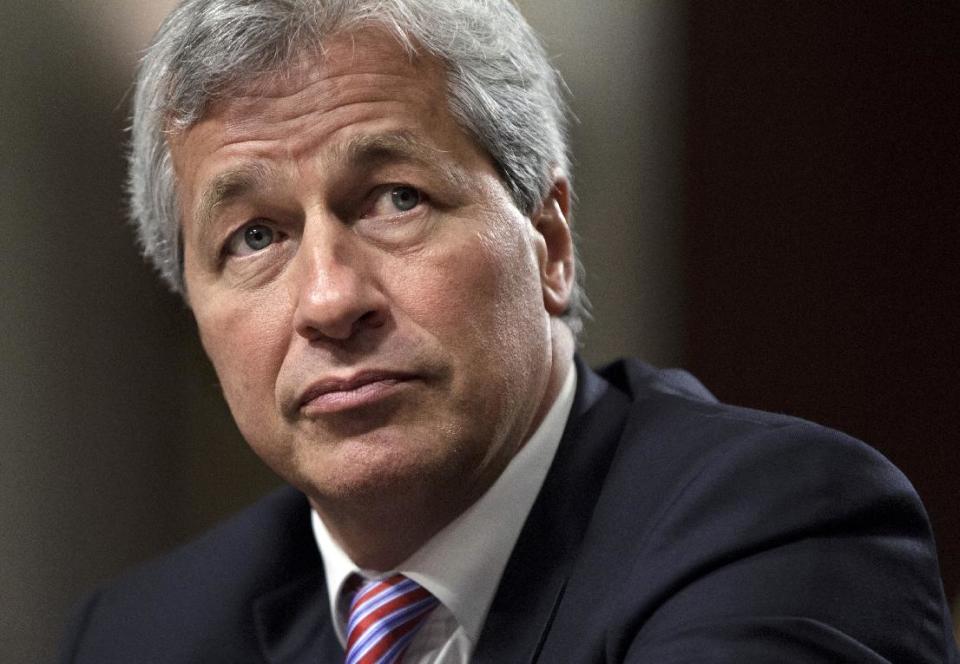
"This has shaken our company to the core," CEO Jamie Dimon said.
The bank said the loss, which Dimon estimated at $2 billion when he disclosed it in May, had grown to $5.8 billion, and could grow larger than $7 billion if financial markets deteriorate severely.
Dimon said the worst appeared to be behind the bank, and investors seemed to agree: They sent JPMorgan stock up 6 percent, making it the best performer in the Dow Jones industrial average.
Daniel Alpert, a founding managing partner with the New York investment bank Westwood Capital Partners LLC, said the bank and Dimon appeared to have learned from the crisis.
He said Dimon now realizes how complex and difficult to manage the bank is, will be more diligent in the future and probably won't be the crusader he has been against some proposed financial regulation.
"Did it cost shareholders a few bucks? Yup," he said. "But it was a non-horrible way of learning the lesson, in the sense that the entire institution didn't burn down, the lesson's been taught and Dimon seems ready to take it."
For his part, Dimon concluded: "We are not proud of this moment, but we are proud of our company."
The investigation, which covered more than a million emails and tens of thousands of voice messages, suggested traders were trying to make losses look smaller, the bank said.
The revelation could expose JPMorgan to civil fraud charges. If regulators decide that employee deceptions caused JPMorgan to report inaccurate financial details, they could pursue charges against the employees, the bank or both.
The Justice Department, the Securities and Exchange Commission and other regulators, including one in Britain, are looking into the loss. The Justice Department and SEC declined comment.
JPMorgan could not necessarily hide behind the actions of its employees. Regulators could decide that its oversight or risk management contributed to the problematic statements.
As a result of what it found, JPMorgan lowered its reported net income for the first quarter of this year by $459 million. The bank was still widely profitable: Even after the adjustment, it made $4.9 billion for the quarter.
JPMorgan also reported net income for the second quarter, which ended June 30, of $5 billion, far higher than the $3.2 billion that Wall Street analysts were expecting. The bank credited stronger mortgage lending and credit card business.
JPMorgan has said the trade in question was designed to offset potential losses made by its chief investment office. Dimon told Congress last month that it was meant to protect the bank in case "things got really bad" in the global economy.
JPMorgan has more than $1 trillion in customer deposits and more than $700 billion in loans. The chief investment office invests the excess cash in a variety of securities, including government and corporate debt and mortgage-backed securities.
Banks typically build hedging strategies to limit their losses if a trade turns against them. Hedges often involve credit default swaps, essentially insurance contracts that pay out if a given corporate bond goes into default.
In JPMorgan's case, instead of offsetting losses, the trade backfired and added to them. While the bank hasn't provided too many specifics on the trade, it appears that the bank believed it had bought too much protection against possible bond defaults, so it hedged its hedge by increasing its risk.
In other words, instead of buying insurance, it was selling insurance. The bank found itself with a pool of investments that were difficult to sell quickly. The drawn-out process of unwinding that portfolio caused JPMorgan's losses to grow.
Dimon stressed the bank's overall health. Speaking broadly about the trading loss, Dimon he told analysts: "We're not making light of this error, but we do think it's an isolated event."
JPMorgan stock gained $2.03 to $36.07. That still left it 11 percent below its closing price of $40.74 on May 10, the day Dimon surprised reporters and stock analysts by holding a conference call to disclose the loss.
Investors were cheered to hear that the bank might resume its plan to buy back its own stock. Dimon said the bank was in discussions with the Federal Reserve and would submit a plan in hopes of buying back stock starting late this year.
The company suspended an earlier plan to buy back $15 billion of its stock after reporting the trading loss.
Dimon said Friday that Ina Drew, the bank's former chief investment officer, who left after the loss came to light, had volunteered to return as much of her pay as was allowed under the so-called clawback provision in her contract.
Drew made more than $30 million combined in 2010 and 2011, according to an Associated Press analysis of regulatory filings. It was not clear how much Drew was voluntarily paying back to the bank. When she resigned under pressure in May after more than 30 years at the bank, she left unvested stock and stock options worth close to $14 million from the last two years.
In addition, the bank said Friday that it would revoke two years' worth of pay from three other senior managers in the division of the bank where the trade occurred. The bank would not say how much money it expected to recover.
Those three senior managers have left the bank, and four others are expected to leave soon. The Wall Street Journal reported Friday that the trader known as the "London whale," for the size of the bets he placed, was among those who had left.
The bank said managers tied to the bad trade had been dismissed without severance pay.
The Swiss bank UBS clawed back pay from executives after a rogue trader in London caused a $2 billion loss last year. The JPMorgan clawback was the most prominent in the United States since the financial crisis in the fall of 2008.
JPMorgan said it had revoked pay from other employees in other cases, but did not provide details.
The Obama administration's financial overhaul law, passed in 2010, required banks to draft policies for recapturing pay from executives whose actions lead to false financial statements.
John Liu, the comptroller of New York City, which has $340 million of its pension fund invested in JPMorgan stock, said he was pleased with the clawback announcement.
While the growing loss was disheartening, he said, revoking pay sends a message that "there are no rewards for wild and excessive gambling with investors' money."
The chairman of the Senate Banking Committee, Tim Johnson of South Dakota, said, "It shouldn't take a congressional hearing for JPMorgan to realize that bank employees should not be rewarded for excessively risky behavior."
Just three months ago, JPMorgan was viewed as the top American bank, guided by Dimon's steady hand. Since the disclosure of the trading loss, however, that reputation has been eroded.
Dimon, who originally dismissed concerns about the bank's trading as a "tempest in a teapot," appeared before Congress twice to apologize and explain himself, and several government agencies have launched investigations.
Under questioning from lawmakers in June about his own role in setting up the investment division responsible for the mess, Dimon declared: "We made a mistake. I'm absolutely responsible. The buck stops with me."
The trading loss has raised concerns that the biggest banks still pose risks to the U.S. financial system, less than four years after the financial crisis erupted in the fall of 2008.
While JPMorgan has proved more than able to absorb the shock from the bad trade, some lawmakers have questioned what would happen if a weaker bank, or one with poor management, were stricken.
___
Daniel Wagner reported from Washington.
