Land reform, Paraguay's ticking political bomb


ASUNCION, Paraguay (AP) — Along Avenida Republica in downtown Asuncion stands the gleaming facade of the $20 million Legislative Palace, where well-tailored congressional aides on their cellphones come and go and armed police guard the legislature that just impeached one president and installed another.
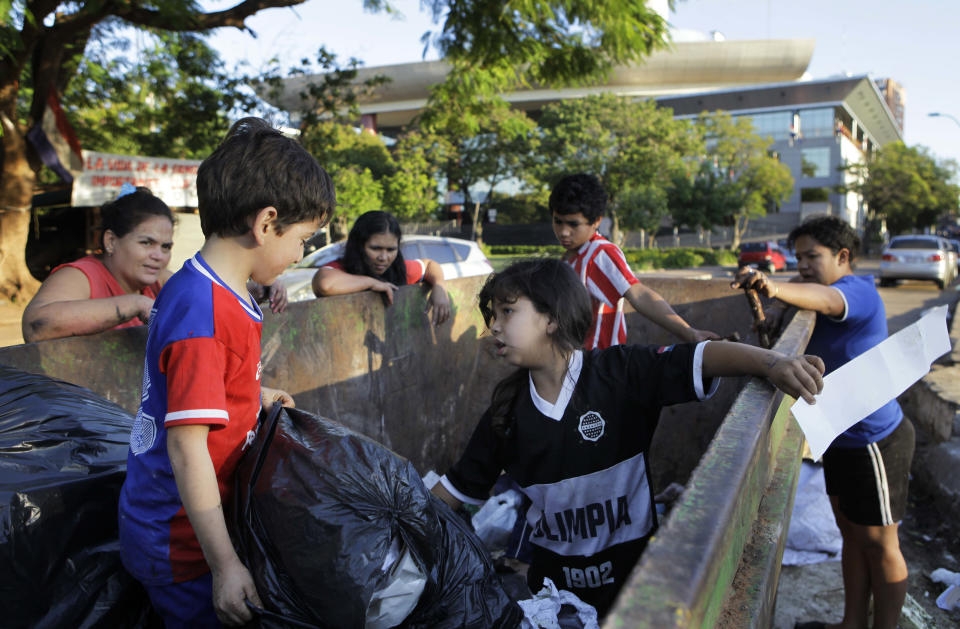
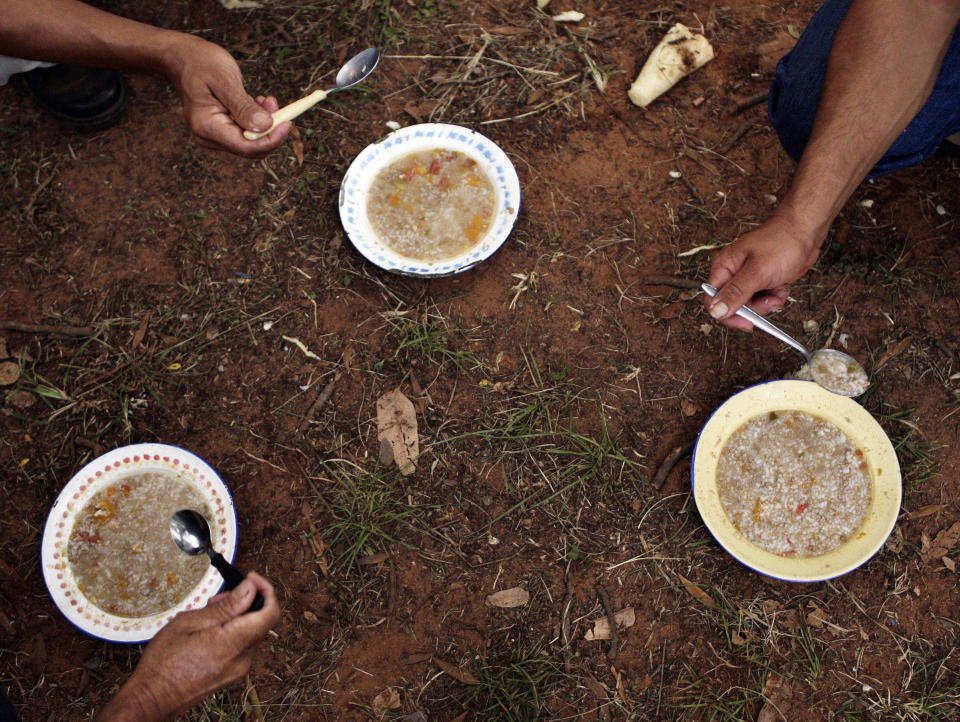
Across the street, a trash-strewn tent camp dominates a public park where residents of a shantytown scheduled for demolition have been protesting for the last year and a half. Pigs and dogs root in the dirt, as flames lap at the grate of a rudimentary cooking pit.
The stark contrast tells the story of a divided people living under the same red-white-and-blue-striped flag.
In one Paraguay, GDP has risen for three straight years and tony nightclubs and steak dinners are commonplace. In the other Paraguay, comprising more than half of the country's 6.5 million people, putting food on the table is a daily struggle and home may be a dirt-floor shelter with no electricity, toilets or running water.
The political crisis in this South American nation is grounded in the tensions between the landed and the landless, which came into sharp relief June 15 when a clash over disputed property left 17 people dead and provoked the impeachment a week later of President Fernando Lugo.
But the roots of the crisis stretch back 140 years, and prevail through an intractable pattern that keeps about 1 percent of the population in control of 77 percent of arable land, while 55 percent of Paraguayans are poor and 31 percent live in extreme poverty by a U.N. count.
Paraguay's poor hoped they had found their savior when Lugo, the bearded and sandal-clad "bishop of the poor," won the presidency in 2008 on campaign promises to deliver land reform, ending the conservative Colorado Party's six decades of single-party rule.
Yet during four years in office, Lugo achieved little meaningful reform.
"It's amazing how that land question again has become the Achilles' heel of Paraguayan politics and of this government in particular," said Miguel Carter, a Paraguayan political scientist specializing in South American land issues at American University in Washington. "Symbolically, the fact that this massacre of 17 people triggered this onslaught is telling."
Agriculture keeps the tiny economy of landlocked Paraguay sputtering along. The two largest exports are soy and beef, and the farm sector last year generated nearly 30 percent of the government's annual revenues of $8 billion.
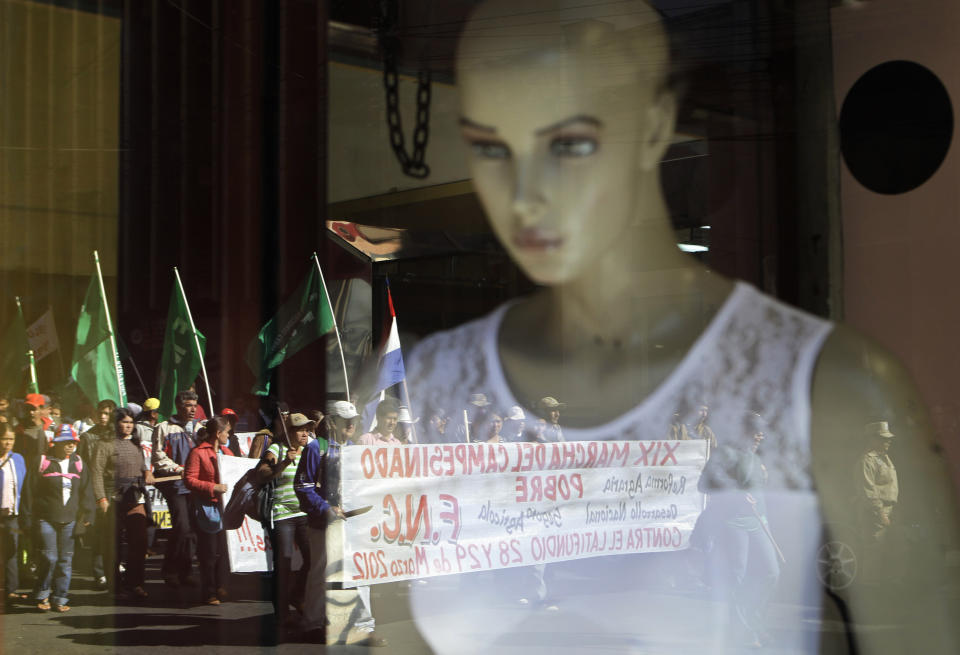
Yet with big agribusiness dominant, the average countryside dweller sees little of that wealth. Between 74,000 and 300,000 people are landless, according to varying estimates. Paraguay is the region's most unequal in land concentration, trailing countries like Brazil, where land problems are at least cushioned by a more industrialized economy.
In Paraguay, the imbalance dates back to around 1870 when the country began unloading terrain to pay off a crippling war debt. The selloff sped up under strongman Gen. Alfredo Stroessner's 1954-1989 rule, when large agribusiness took hold and 8 million hectares (20 million acres) passed to private buyers, many of them friends of the regime.
The post-Stroessner constitution gives lawmakers wide leeway in checking the president. With weak support in congress against strong conservative opposition, the 61-year-old Lugo apparently never felt confident enough to push comprehensive land reform.
He also didn't keep promises to hold a nationwide survey to untangle an out-of-date land registry in which many titles vastly understate the amount of land controlled by large soy and cattle farms. By some accounts the listed holdings exceed the country's total square acreage. In some cases, multiple people lay claim to the same land and in others owners have apparently illegally claimed adjacent terrain as their own.
Lugo also lost budget battles that could have funded land acquisitions. During his administration, Congress passed Paraguay's first income tax, but delayed its implementation until 2013, just months before Lugo's term would have ended. An agreement struck with Brazil to triple the amount of energy it pays for energy from a shared river dam to $360 million annually, but Congress kept tight control of the windfall.
Against strong opposition and impeachment talk that swirled long before his recent troubles, Lugo "never was up to tackling what was Paraguay's biggest social problem," said Alfredo Boccia Paz, a Paraguayan political columnist. But he acknowledged that "If he had done much more, he probably would have fallen sooner."
Colorado leader Horacio Cartes denied the impeachment was a power grab, saying his party was motivated by Lugo's "bad governance." There is "only one way for the Colorado party to return to power: by winning the 2013 elections," he said.
Only belatedly, after one of Lugo's appointees was immersed in scandal, did he order a clean-up at the agency responsible for land reform.
"The idea was to recover lands that Stroessner fraudulently gave to his friends and families," said Belarmino Balbuena, leader of the Paraguayan Peasants' Movement. "That idea couldn't move forward because the courts put the brakes on any attempt to recover them, in compliance with laws that protect the rich, not the poor."
With a 1.8 percent annual population growth rate, small plots of land can't sustain large families and the industrial sector is too small to absorb the overspill. So many peasants migrate to construction jobs in places like Buenos Aires, or to shantytowns in Asuncion.
"It's this model of development that has become a curse on Paraguay. It concentrates land, it doesn't lead the country to industrialization, therefore it creates large segments of the population living in poverty," said Carter, the American University political scientist.
Lugo gets credit for sincerely wanting to lift the rural poor, and for publicly legitimizing discussion of fishy land transfers. He also funded programs to distribute seeds to poor farmers and teach them about fighting crop disease and raising livestock.
But in 2010, just 30,000 titles were granted under land reform, according to Eugenio Alonso, who then oversaw the land agency.
The president couldn't implement land reform quickly because the government didn't have any land under its control to distribute, said Luis Aguayo, leader of Paraguay's largest landless movement group with about 60,000 members. "But he was advancing, administratively, to recover terrain controlled by the big landowners."
But at the same time, during Lugo's administration police launched 300 operations to clear invading protesters from private holdings.
Now his successor, former Vice President Federico Franco of the Liberal Party, has to make land reform a central issue of his own foreshortened term, which ends August 2013. Franco on Wednesday ordered the Agriculture Ministry to conduct the national land survey as quickly as possible, saying a solution to Paraguay's agrarian problem is "long-awaited."
___
Associated Press writers Pedro Servin and Belen Bogado in Asuncion, Paraguay, contributed to this report.
___
Follow Peter Orsi on Twitter at www.twitter.com/Peter_Orsi
