
What Makes Earth So Perfect for Life?
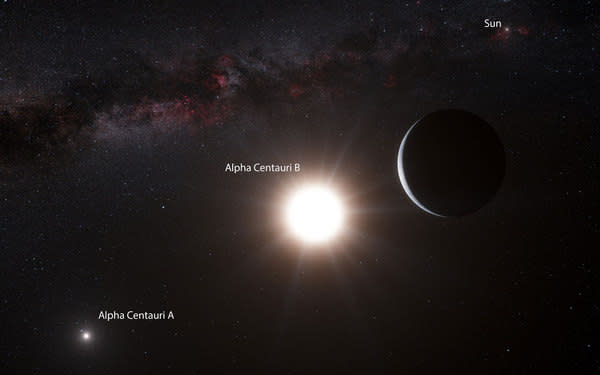
The closest star system to our own made headlines yesterday with the announcement that it hosts a planet about the mass of Earth — a tantalizing discovery so close, astronomically speaking, to us.
While the newfound planet may be Earth-sized, researchers say it is almost certainly barren.
Astronomers detected the alien world around the sunlike star Alpha Centauri B, which is a member of a three-star system only 4.3 light-years away from our solar system. This planet, known as Alpha Centauri Bb,is about as massive as Earth, but its hot surface may be covered with molten rock — its orbit takes it about 25 times closer to its star than Earth is from the sun.
"We're pretty sure there's no chance of life on this planet," said MIT planetary scientist Sara Seager.
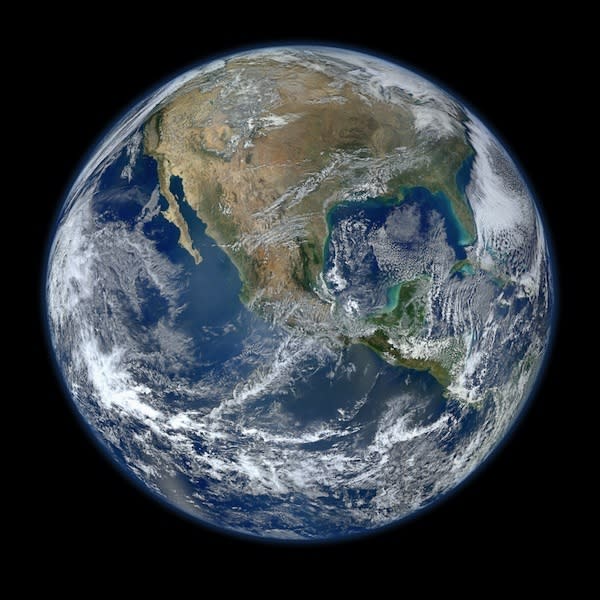
So what makes a world such as ours able to host life? Why is Earth so special?
There are a few key ingredients that scientists often agree are needed for life to exist — but much debate remains as to what limits there actually might be on life. Even Earth hosts some strange creatures that live in extreme environments. [Strangest Places Where Life Is Found on Earth]
Here's what makes life able to thrive on our home planet (and likely for alien life to arise on other worlds):
Water
"First, you'd need some kind of liquid, any place where molecules can go react," Seager told OurAmazingPlanet. In such a soup, the ingredients for life as we know it, such as DNA and proteins, can swim around and interact with each other to carry out the reactions needed for life to happen.
The most common contender brought up for this solvent is the one life uses on Earth: water. Water is an excellent solvent, capable of dissolving many substances. It also floats when it is frozen, unlike many liquids, meaning that ice can insulate the underlying fluid from freezing further. If water instead sunk when frozen, this would allow another layer of water to freeze and sink, and eventually all the water would get frozen, making the chemical reactions behind life impossible.
Astronomers looking for extraterrestrial life most often focus on planets in the so-called habitable zones of their stars — orbits that are neither too hot nor too cold for liquid water to persist on the surfaces of those worlds. Earth happened to hit the Goldilocks mark, forming within the sun's habitable zone. Mars and Venus lie outside it; if Earth's orbit had been just a bit further inside or outside of where it is, life may likely never have arisen and the planet would be a cold desert like Mars or a cloudy furnace like Venus.
Of course, alien life may not play by the rules we're used to on Earth.
Astrobiologists increasingly suggest looking beyond conventional habitable zones. For instance, while liquid water might not currently persist on the surface of Mars or Venus, there may have been a time when it did. Life might have evolved on their surfaces in that time, and then either fled to safer locales on those planets, such as underground, or adapted to the environment when it became harsh, much as so-called extremophile organisms have on Earth, or both.
In addition, other solvents might host life. "Saturn's moon Titan has liquid methane and ethane." Seager said.
Energy
Second, life needs energy. Without energy, virtually nothing would happen.
The most obvious source of energy is a planet or moon's host star, as is the case on Earth, where sunlight drives photosynthesis in plants. The nutrients created by photosynthesis in turn are what the bulk of life on Earth directly or indirectly relies on for fuel. [50 Amazing Facts About Earth]
Still, countless organisms on Earth subsist on other sources of energy as well, such as the chemicals from deep water vents. There may be no shortage of energy sources for life to live off.
Time
Scientists have argued that habitable worlds need stars that can live at least several billion years, long enough for life to evolve, as was the case on Earth.
Some stars only live a few million years before dying. Still, "life might originate very fast, so age is not that important," astrobiologist Jim Kasting at Pennsylvania State University told OurAmazingPlanet.
For instance, the Earth is about 4.6 billion years old. The oldest known organism first appeared on Earth about 3.5 billion years ago, meaning that life might conceivably evolve in 1.1 billion years or less. However, more complex forms of life did take longer to evolve — the first multicellular animals did not appear on Earth until about 600 million years ago. Because our sun is so long-lived, comparatively, higher orders of life, including humans, had time to evolve.
Recycling
Other researchers have suggested that plate tectonics is vital for a world to host life — that is, a planet whose shell is broken up into plates that constantly move around.
"People talk about plate tectonics as essential in recycling molecules life needs," Seager said. For instance, carbon dioxide helps trap heat from the sun to keep Earth warm. This gas normally gets bound up in rocks over time, meaning the planet would eventually freeze. Plate tectonics helps ensure this rock gets dragged downward, where it melts, and this molten rock eventually releases this carbon dioxide gas back into the atmosphere through volcanoes.
"Plate tectonics is useful but probably not imperative," Kasting said. Seager agreed, saying that "volcanism might very well provide enough fresh supplies of whatever life might need."
Bonus features
Other factors researchers have trotted out for why life succeeded on Earth include how little variation there is in our sun's radiation compared with more volatile stars, or how our planet has a magnetic field that protects us from any storms of charged particles from the sun. Violent bursts of radiation could have scoured life from Earth in its early, fragile stages.
Still, "people are constantly rethinking each of these things and how important they are," Seager said. "We're trying to be less conservative and more open-minded. We want to learn about what gray areas might exist for possible life."
Earth remains the only known planet to host life, due to a unique combination of factors. However, continued monitoring of alien worlds might one day change that, by finding other planets that share these attributes or by discovering other ways that life has found to blossom in the universe.
Images: Closest-Ever Alien Planet, the Earth-Size Alpha Centauri Bb
Alpha Centauri Stars & Planet Explained: Our Nearest Neighbors (Infographic)
Copyright 2012 OurAmazingPlanet, a TechMediaNetwork company. All rights reserved. This material may not be published, broadcast, rewritten or redistributed.
