
Nobel economist: Inequality weighs on US economy
NEW YORK (AP) — What's wrong with the U.S. economy?
Growth comes in fits and starts. Unemployment has been over 8 percent for three and a half years. Cutting taxes and interest rates hasn't worked, at least not enough.
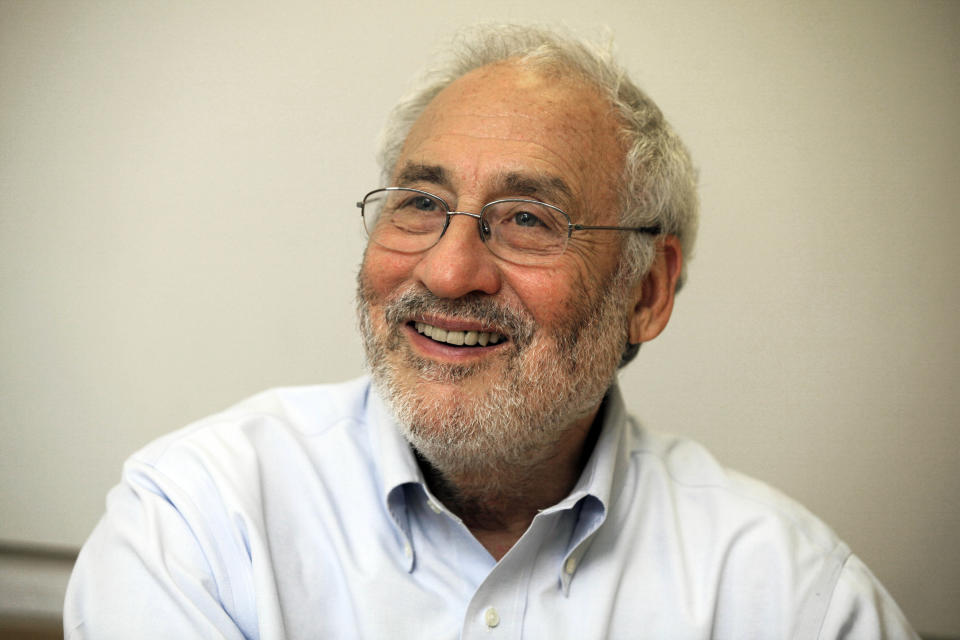
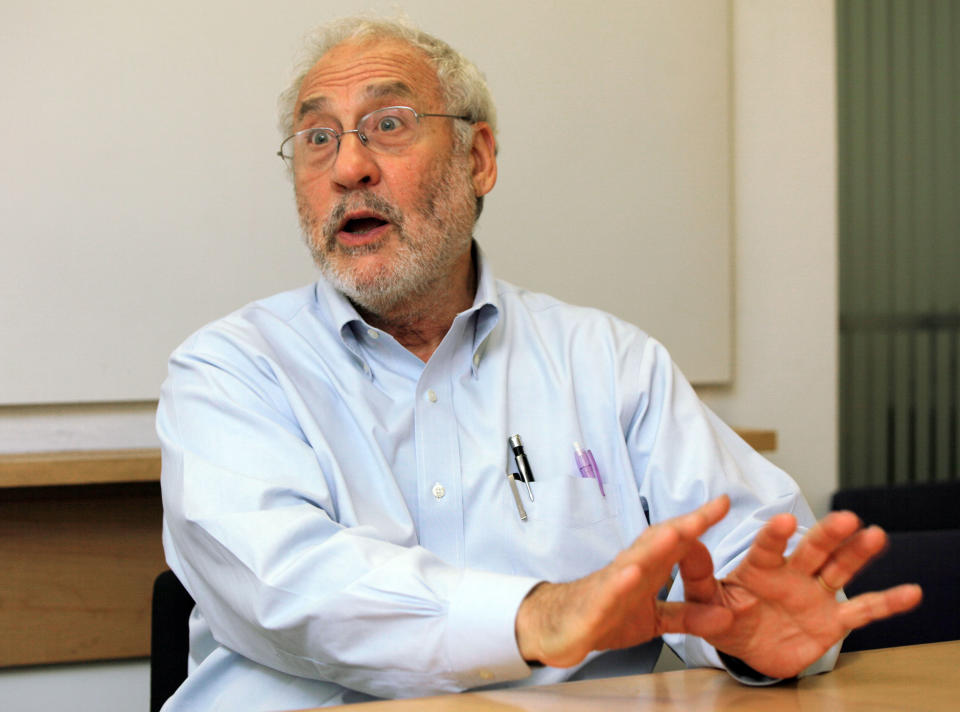
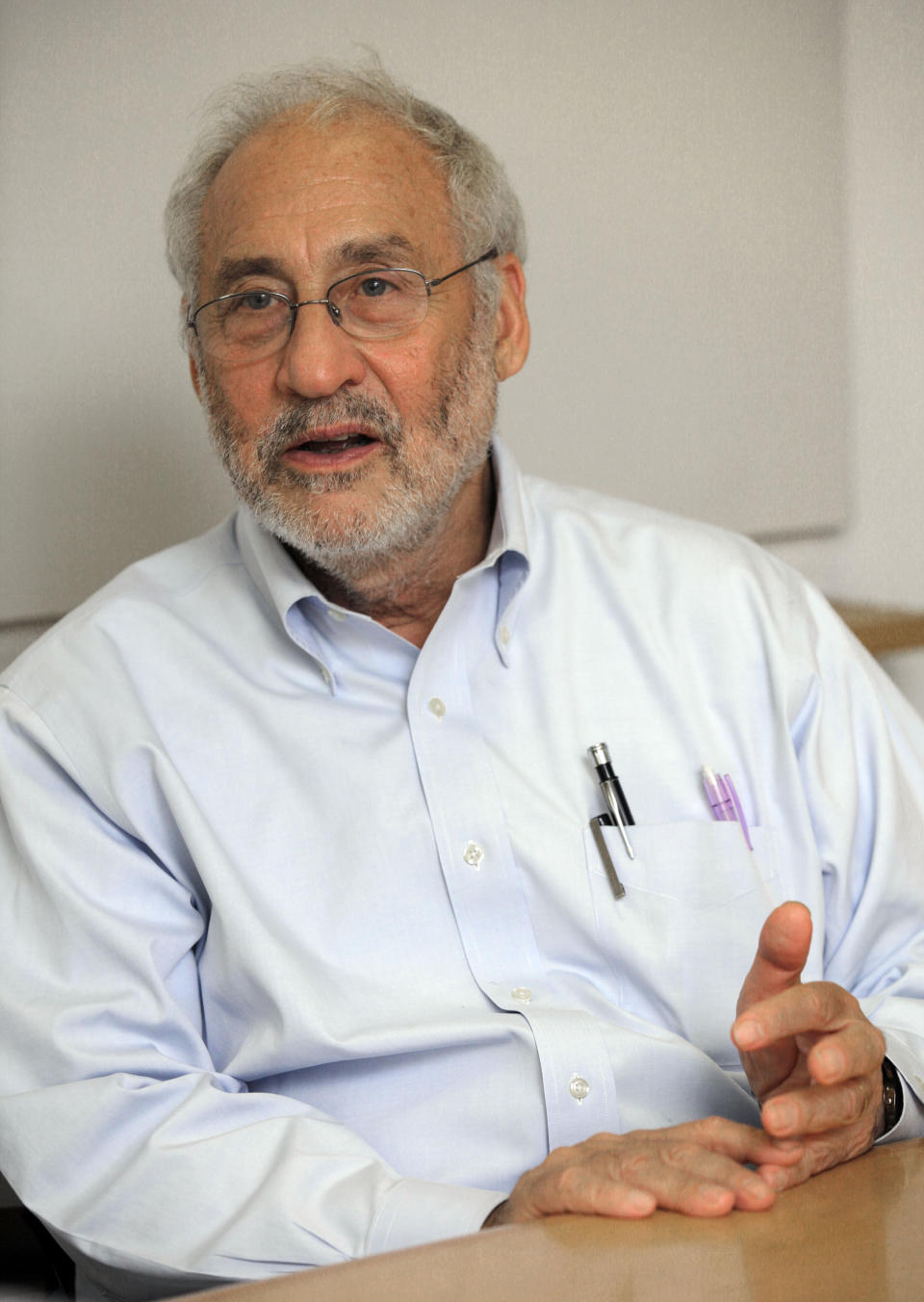
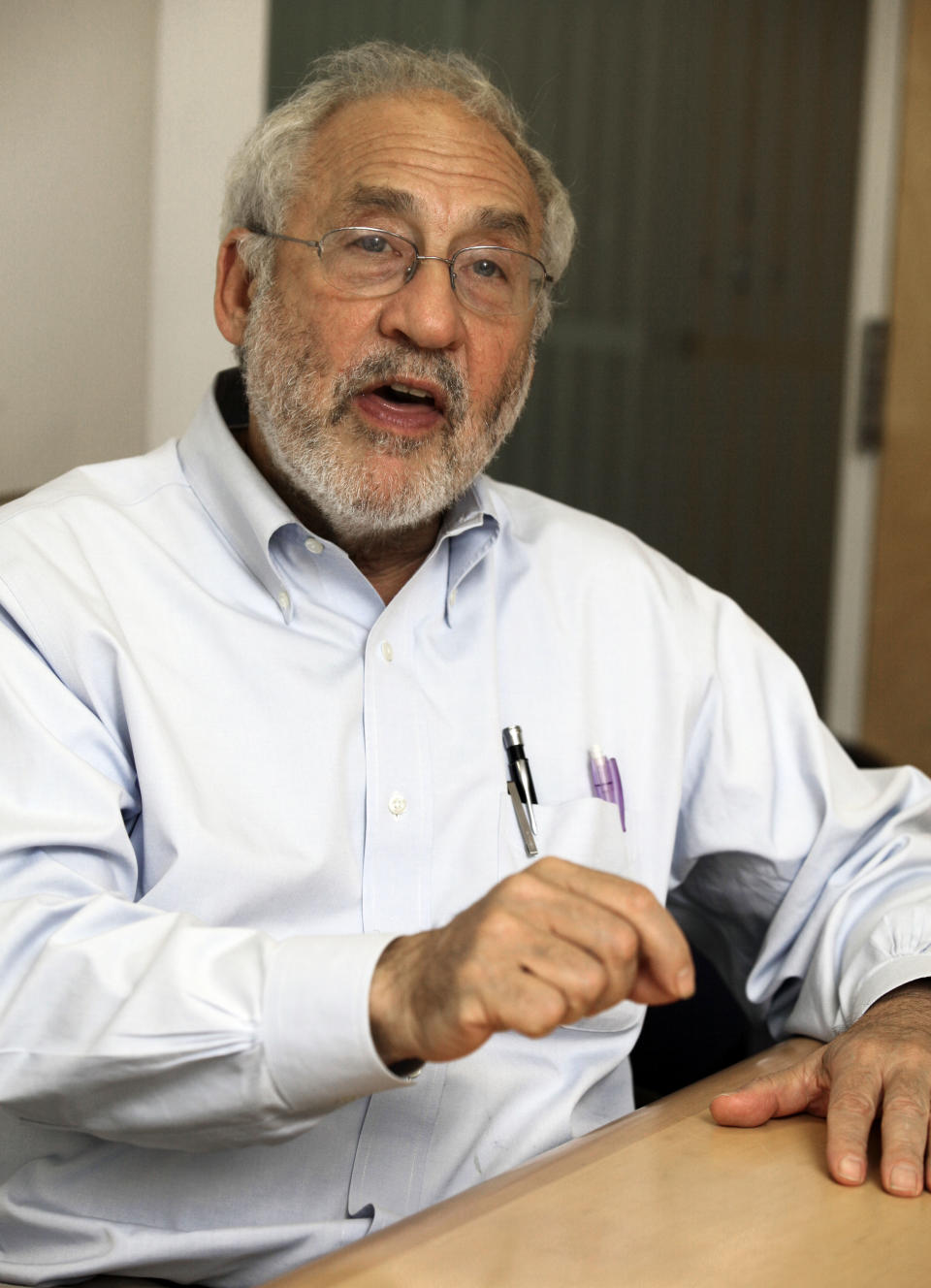
To Joseph Stiglitz, the Nobel Prize-winning economist, the economy's strange behavior can be traced to the growing gap between wealthy Americans and everyone else.
In his new book, "The Price of Inequality," he connects surging student loan debt, the real-estate bubble and many of the country's other problems to greater inequality.
When the rich keep getting richer, he says, the costs pile up. For instance, it's easier to climb up from poverty in Britain and Canada than in the U.S.
"People at the bottom are less likely to live up to their potential," he says.
Stiglitz has taught at Yale, Oxford and MIT. He served on President Bill Clinton's council of economic advisers, then left the White House for the World Bank, where he was the chief economist. He's now a professor at Columbia University.
In an interview with The Associated Press, Stiglitz singled out the investment bank Goldman Sachs, warned about worrying over government debt and argued that a wider income gap leads to a weaker economy.
Below are excerpts, edited for clarity.
___
Q: The Occupy Wall Street demonstrations are no longer in the news, but you make the case that income inequality is more important than ever. How so?
A: Because it's getting worse. Look at the recent Federal Reserve numbers. Median wealth fell 40 percent from 2007 to 2010, bringing it back to where it was in the early '90s. For two decades, all the increase in the country's wealth, which was enormous, went to the people at the very top.
It may have been a prosperous two decades. But it wasn't like we all shared in this prosperity.
The financial crisis really made this easy to understand. Inequality has always been justified on the grounds that those at the top contributed more to the economy — "the job creators."
Then came 2008 and 2009, and you saw these guys who brought the economy to the brink of ruin walking off with hundreds of millions of dollars. And you couldn't justify that in terms of contribution to society.
The myth had been sold to people, and all of a sudden it was apparent to everybody that it was a lie.
Mitt Romney has called concerns about inequality the "politics of envy." Well, that's wrong. Envy would be saying, "He's doing so much better than me. I'm jealous." This is: "Why is he getting so much money, and he brought us to the brink of ruin?" And those who worked hard are the ones ruined. It's a question of fairness.
Q: Markets aren't meant to be fair. As long as we have markets, there are going to be winners and losers. What's wrong with that?
A: I'm not arguing for the elimination of inequality. But the extreme that we've reached is really bad. Particularly the way it's created. We could have a more equal society and a more efficient, stable, higher-growing economy. That's really the "so what." Even if you don't have any moral values and you just want to maximize GDP growth, this level of inequality is bad.
It's not just the unfairness. The point is that we're paying a high price. The story we were told was that inequality was good for our economy. I'm telling a different story, that this level of inequality is bad for our economy.
Q: You argue that it's making our economy grow more slowly and connect it to "rent- seeking." That's an economist's term. Can you explain it in layman's terms?
A: Some people get an income from working, and some people get an income just because they own a resource. Their income isn't the result of effort. They're getting a larger share of the pie instead of making the pie bigger. In fact, they're making it smaller.
Q: So, for example, I put a toll booth at a busy intersection and keep all the money for myself.
A: That's right. You just collect the money. You're not adding anything. It's often used when we talk about oil-rich countries. The oil is there, and everybody fights over the spoils. The result is that those societies tend to do very badly because they spend all their energy fighting over the pile of dollars rather than making the pile of dollars bigger. They're trying to get a larger share of the rent.
Q: Where do you see this in the U.S.? Can you point to some specific examples?
A: You see it with oil and natural resources companies and their mineral leases and timber leases. Banks engaged in predatory lending. Visa and MasterCard just settled for $7 billion for anticompetitive behavior. They were charging merchants more money because they have monopoly power.
One good example was Goldman Sachs creating a security that's designed to fail. That's just taking money from some fool who trusted them. Our society functions well when people trust each other. It's particularly important for people to trust their banks. Goldman basically said, "You can't trust us."
Q: Economic growth is slowing again. Unemployment seems to be stuck above 8 percent. Is that the result of high debts or slower spending?
A: The fundamental problem is not government debt. Over the past few years, the budget deficit has been caused by low growth. If we focus on growth, then we get growth, and our deficit will go down. If we just focus on the deficit, we're not going to get anywhere.
This deficit fetishism is killing our economy. And you know what? This is linked to inequality. If we go into austerity, that will lead to higher unemployment and will increase inequality. Wages go down, aggregate demand goes down, wealth goes down.
All the homeowners who are underwater, they can't consume. We gave money to bail out the banking system, but we didn't give money to the people who were underwater on their mortgages. They can't spend. That's what's driving us down. It's household spending.
Q: And those with money to spend, you point out, spend less of every dollar. Those at the top of the income scale save nearly a quarter of their income. Those at the bottom spend every penny. Is that why tax cuts seem to have little effect on spending?
A: Exactly. When you redistribute money from the bottom to the top, the economy gets weaker. And all this stuff about the top investing in the country is (nonsense). No, they don't. They're asking where they can get the highest returns, and they're looking all over the globe. So they're investing in China and Brazil and Latin America, emerging markets, not America.
If the U.S. is a good place to invest, we'll get money from all over the world. If we have an economy that's not growing, we won't get investment. That's exactly what's happening. The Federal Reserve stimulates the economy by buying bonds. Where's the money go? Abroad.
Q: What's the answer, then? Raising taxes on wealthy people can't possibly solve all the problems you mention.
A: No, there's no magic bullet. But there are other ways of doing things. Just to pick one, look at how we finance higher education. Right now, we have this predatory lending system by our banks with no relief from bankruptcy. In some fundamental ways, it's really evil and oppressive. Parents that co-sign student loans now find out they can't discharge those loans, even in bankruptcy.
Education is so important, but there are so many barriers. Just 8 percent of those students in the most selective colleges come from the bottom half of the income scale. Eight percent! They can't get in because they don't get as good an education in elementary and high schools. Education is the vehicle for social mobility. It's how we restore the American dream.
