
Now arriving on time: Your flight and suitcase
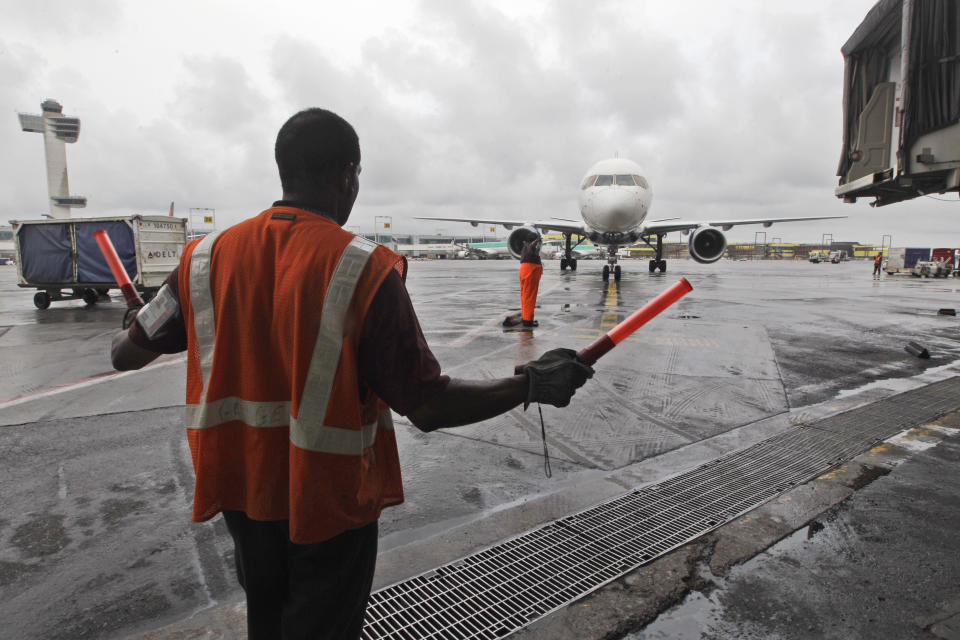
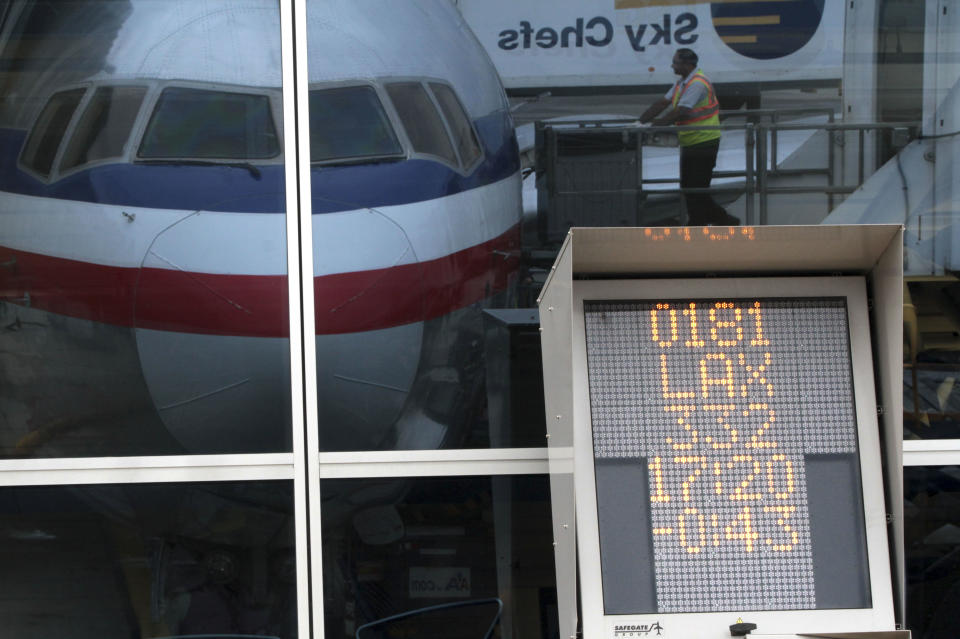

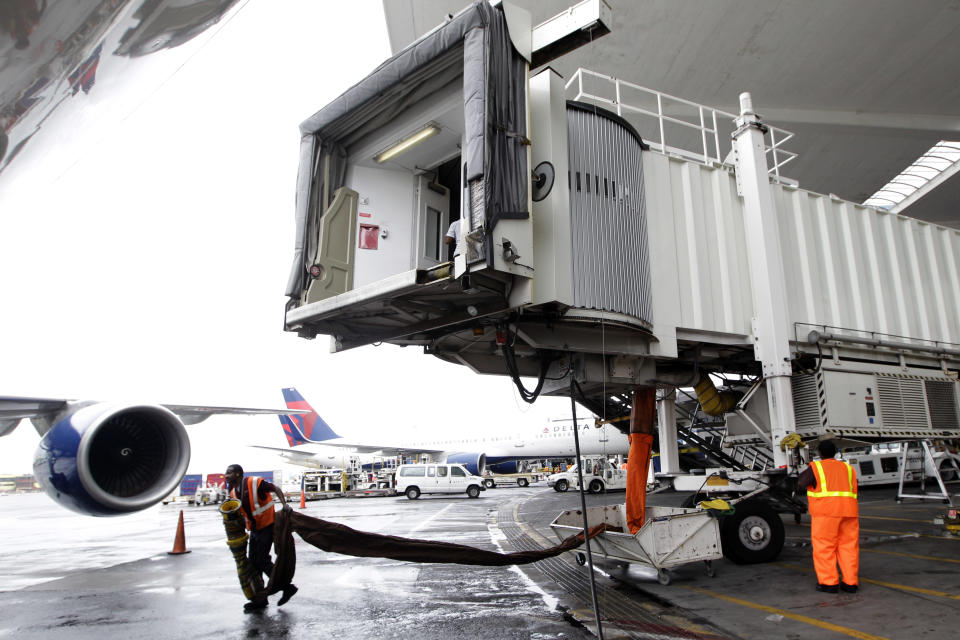

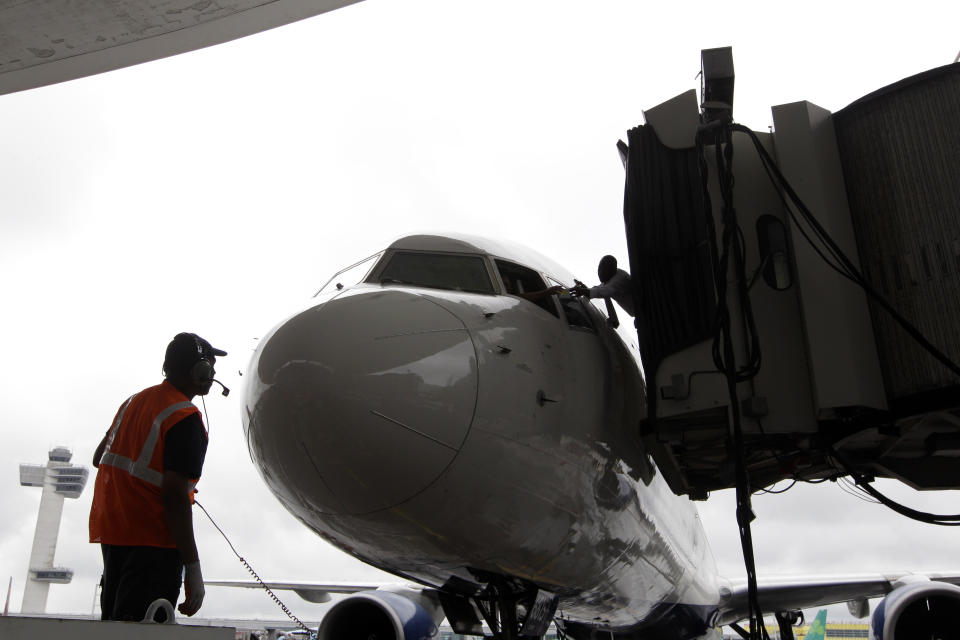
NEW YORK (AP) — U.S. airlines are more punctual and less likely to lose your bag than at any time in more than two decades.
Travelers still have to put up with packed planes, rising fees and unpredictable security lines, but they are late to fewer business meetings and are not missing as many chances to tuck their kids into bed.
Nearly 84 percent of domestic flights arrived within 15 minutes of their scheduled time in the first half of the year — the best performance since the government started keeping track in 1988.
The improvement over the first six months of 2011, when 77 percent of flights were on time, is mostly a result of good weather and fewer planes in the sky because of the weak economy.
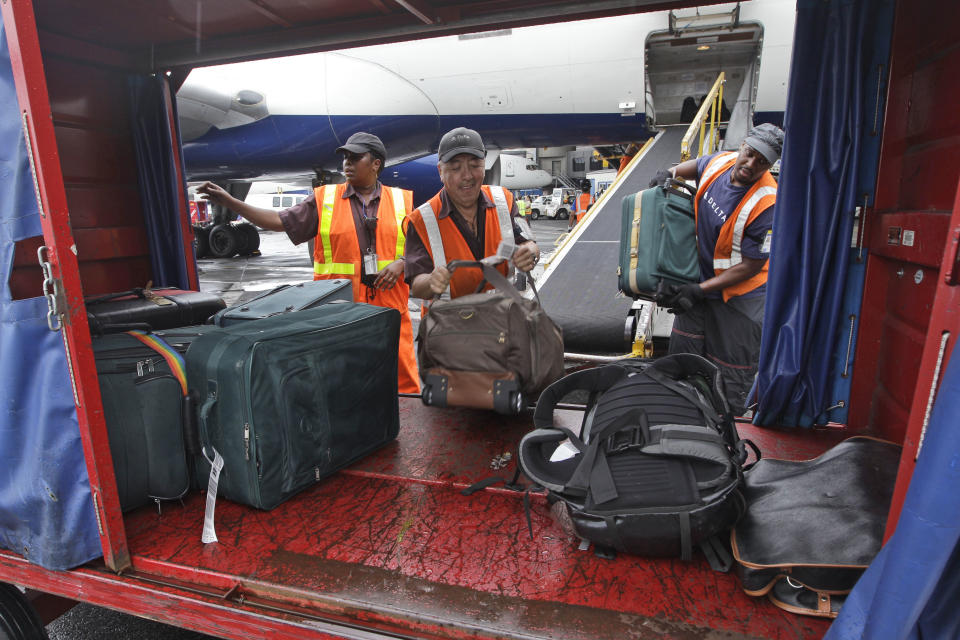
Airlines are also doing a better job of handling bags. Fewer than three suitcases per 1,000 passengers were reported lost, damaged or delayed from January through June, a record low.
The two areas of improvement are related: When flights are late, bags often miss their connection.
"My flights this year have been way better," said Amanda Schuier, a sales manager for a Kansas City, Mo., trucking supplier who flies roughly four times a week. "In the past six months, I've only had two delays."
If the current pace continues, the airlines will beat their best full-year performance, recorded in 1991, when nearly 83 percent of flights arrived on time. The worst full year was 2000, when just 73 percent of flights arrived on time, according to an Associated Press analysis of Bureau of Transportation Statistics data.
The worst year for baggage handling was 1989, when nearly eight suitcases per 1,000 passengers were reported late, lost or damaged.
There are still problems. About one out of every six flights is late — and that's after airlines have adjusted schedules to account for congestion, said airline consultant Michael Boyd.
"That's an indictment, not a record," he said.
When flights are on time, it isn't just good for passengers — it also helps the airlines' bottom lines. The industry says it costs an average of $75 a minute to operate a plane. Last year, domestic delays cost airlines an estimated $5.2 billion. U.S. airlines made a combined $577 million in profit last year.
In the first six months of this year, nature has been kind to airlines. There have been 10 percent fewer thunderstorms than usual, according to a decade of data analyzed by the National Oceanic and Atmospheric Administration's Aviation Weather Center.
There has also been less snow. New York has had about 3 inches this year, compared with a 10-year average of 20 inches. Chicago, which averages 27 inches of snow from January through June, has had just 18. And Minneapolis has had 12 inches, one-third the normal snowfall at this point in the year.
The recession led fewer people to fly and prompted airlines to ground planes, clearing up airspace. In 2007, 14.8 million airplanes took off and landed at the nation's 35 largest airports, according to the Federal Aviation Administration. Last year, the number was down 10 percent to 13.3 million.
The airlines also are taking steps to improve their on-time performance. They include:
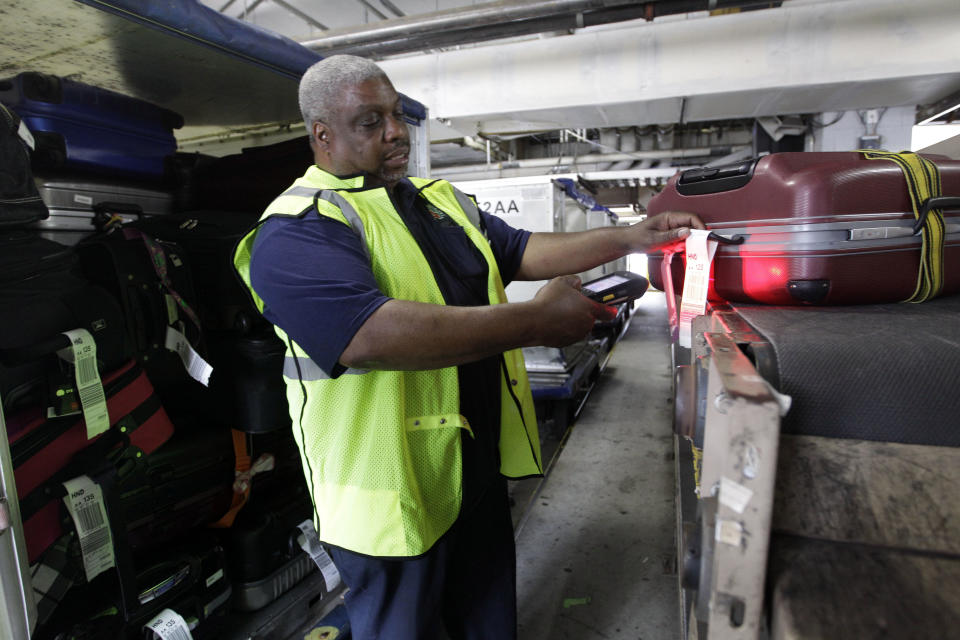
— Better technology. Airlines are flying newer planes with fewer maintenance problems. New tools track the boarding of passengers and loading of baggage onto individual flights. If either falls behind schedule, extra workers are deployed to ensure an on-time departure.
— More realistic schedules. Flight times have been extended on some trips to account for air traffic delays. For instance, Delta Air Lines adds up to 16 minutes for Atlanta-to-New York flights during peak hours. Boyd and other critics say padding schedules may improve on-time statistics, but it shouldn't be confused with better service.
— Timely delivery of food and fuel. Airlines have revised contracts with suppliers to include incentives for on-time deliveries and penalties for late ones.
— Improved boarding procedures. The order passengers get on a plane has been streamlined, and larger overhead bins have been installed.
New government rules also deter delays. The Department of Transportation now requires airlines to display the on-time performance of each flight on their websites.
There are also stiff penalties for long delays. For instance, if a plane is sitting on the tarmac for more than three hours, the airline can be fined up to $27,500 per passenger — or about $4 million for a typical jet. To avoid those fines, airlines created new software. As delays persist, special alerts flash for the local airport manager and at headquarters.
Since Transportation Secretary Ray LaHood took office in 2008, the department has nearly tripled the number of annual enforcement actions taken against airlines — from 20 to 59 last year. Fines have jumped from $1.2 million to $6.1 million.
"We sent a very loud message to the airlines that they need to treat people with respect," LaHood said. "People pay a lot of money to get on an airplane and they expect to have to on-time service."
The airlines say changes they have made will help when the weather worsens and when more passengers return to the skies.
Since luggage fees were introduced five years ago, there are fewer bags in the system. But airlines say that isn't the reason for improvement. They say investments in new technology are paying off. The proof: Airlines such as Southwest Airlines Co. and JetBlue Airways Corp., which don't charge for the first checked bag, have also seen improvement.
Southwest changed procedures at its larger airports to speed up baggage transfers. Instead of waiting for all bags to be removed from a plane, the airline now starts shuttling suitcases to connecting flights halfway through the unloading process. An extra trip across the airport is required, but the overall transfer process is faster and fewer flights are delayed, said Steve Hozdulick, senior director of operational performance.
At American Airlines, part of AMR Corp., a new system provides real-time directions to baggage tugs. If a flight is delayed or gate changed, the driver is given a new order to deliver bags. Previously, drivers were given a printout of stops that was "obsolete the minute it's printed," said Maya Leibman, the airline's chief information officer.
Ramp workers at American also have 2,000 handheld devices to scan each suitcase before it's placed on a plane. If a worker attempts to load a bag onto the wrong flight, the device flashes a warning and vibrates. The number of bags loaded onto the wrong flight has fallen 26 percent.
Airline executives say more reliable baggage handling is just as important as improved punctuality. After all, what good is it to arrive at your destination on-time if your suitcase isn't waiting for you?
___
Scott Mayerowitz can be reached at http://twitter.com/GlobeTrotScott.
