Parents wire kids to prove teachers' verbal abuse
CHERRY HILL, N.J. (AP) — Teachers hurled insults like "bastard," ''tard," ''damn dumb" and "a hippo in a ballerina suit." A bus driver threatened to slap one child, while a bus monitor told another, "Shut up, you little dog."
They were all special needs students, and their parents all learned about the verbal abuse the same way — by planting audio recorders on them before sending them off to school.
In cases around the country, suspicious parents have been taking advantage of convenient, inexpensive technology to tell them what children, because of their disabilities, are not able to express on their own. It's a practice that can help expose abuses, but it comes with some dangers.
This week, a father in Cherry Hill, N.J., posted on YouTube clips of secretly recorded audio that caught one adult calling his autistic 10-year-old son "a bastard." In less than three days, video got 1.2 million views, raising the prominence of the small movement. There have been at least nine similar cases across the U.S. since 2003.
"If a parent has any reason at all to suggest a child is being abused or misused, I strongly recommend that they do the same thing," said Wendy Fournier, president of the National Autism Association.
But George Giuliani, executive director of the National Association of Special Education Teachers and director of special education at Hofstra University in Hempstead, N.Y., says that while the documented mistreatment of children has been disturbing, secret recordings are a bad idea. They could, he said, violate the privacy rights of other children.
"We have to be careful that we're not sending our children in wired without knowing the legal issues," Giuliani said.
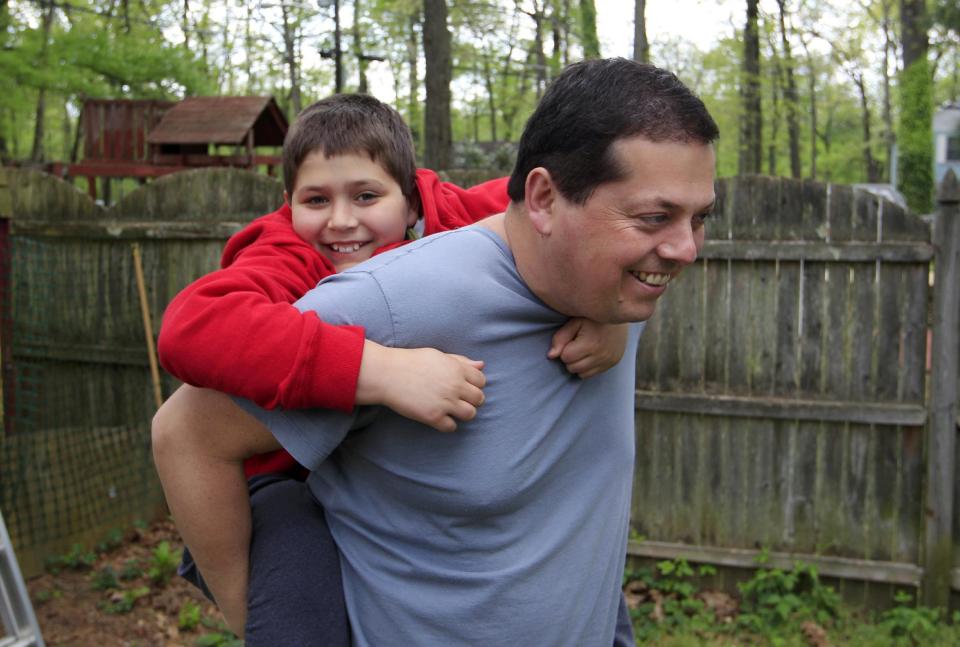
Stuart Chaifetz, the Cherry Hill father, said he began getting reports earlier in the school year that his 10-year-old son, Akian, was being violent.
Hitting teachers and throwing chairs were out of character for the boy, who is in a class with four other autistic children and speaks but has serious difficulty expressing himself. Chaifetz said he talked to school officials and had his son meet with a behaviorist. There was no explanation for the way Akian was acting.
"I just knew I had to find out what was happening there," he said. "My only option was to put a recorder there. I needed to hear what a normal day was like in there."
On the recording, he heard his son being insulted — and crying at one point.
He shared the audio with school district officials. The superintendent said in a statement that "the individuals who are heard on the recording raising their voices and inappropriately addressing children no longer work in the district."
Since taking the story public, Chaifetz, who has run unsuccessfully for the school board in Cherry Hill and once went on a hunger strike to protest special-education funding cuts, said he has received thousands of emails.
At least a few dozen of those he has had a chance to read have been from parents asking for advice about investigating alleged mistreatment of their children.
It's easy, he tells them.
"It was a simple $30 digital audio recorder. I just put it in the kid's pocket," he said. "Unless they're looking for it, they're not going to find it."
With more parents taking such action, he said, fewer educators may get out of line with the way they treat students who cannot speak up for themselves.
"For the tiny percentage of teachers that do it, I hope that they live in fear every day that a kid's going to walk in with a recorder," he said.
He gives just one caveat: "Make sure it's legal in your state."
Laws on audio recordings vary by state, but in most of the U.S., including New Jersey, recordings can generally be made legally if one party gives consent. Over the past decade, courts in New York and Wisconsin have ruled that recordings made secretly on school buses were legal, finding that there is a diminished expectation of privacy for drivers on the bus.
The recordings have led to firings in several states, criminal convictions of bus employees in Wisconsin and New York, and legal settlements worth hundreds of thousands of dollars in Ohio and Missouri.
Even if it is found to be legal, the recording could have a chilling effect on classrooms, says Giuliani, of the special-education teachers' group. Teachers could worry that every one of their words could be monitored. And a recording could be edited to distort the teachers' meaning.
He said that the rise of the secret recordings suggests it's time to discuss a way to make sure the most vulnerable children are not being mistreated in a more formal way.
"In classrooms where children are nonverbal, unable to communicate, defenseless," he said, "we should start to have a discussion of whether cameras in the classroom are necessary."
That's a move that the National Autism Association's Fournier also says is needed.
___
AP News Researcher Jennifer Farrar in New York contributed to this report.
___
Follow Mulvihill at http://www.twitter.com/geoffmulvihill
