
Study blames ocean CO2 for oyster declines
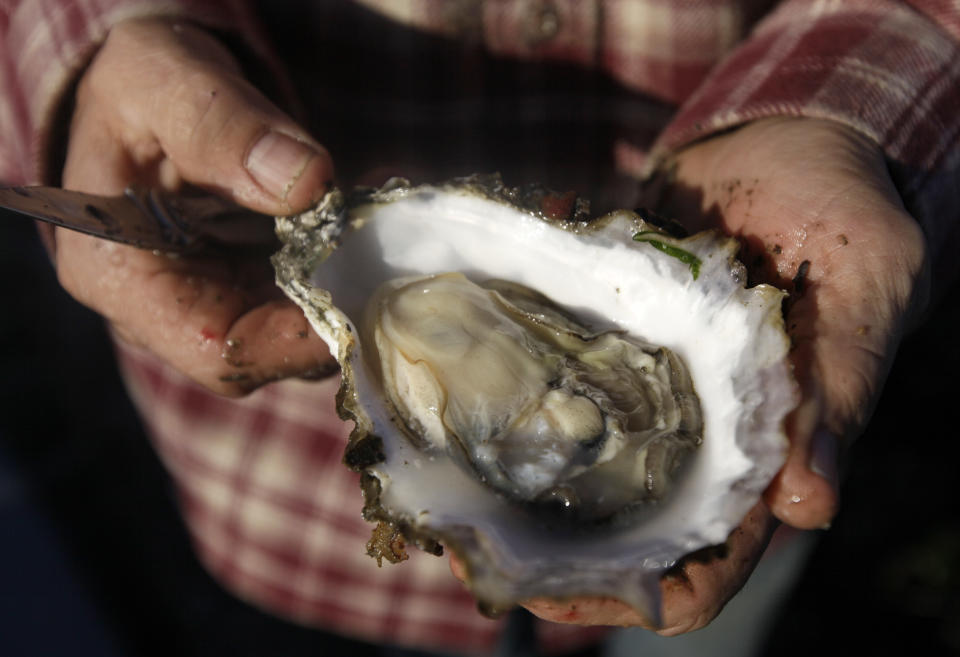
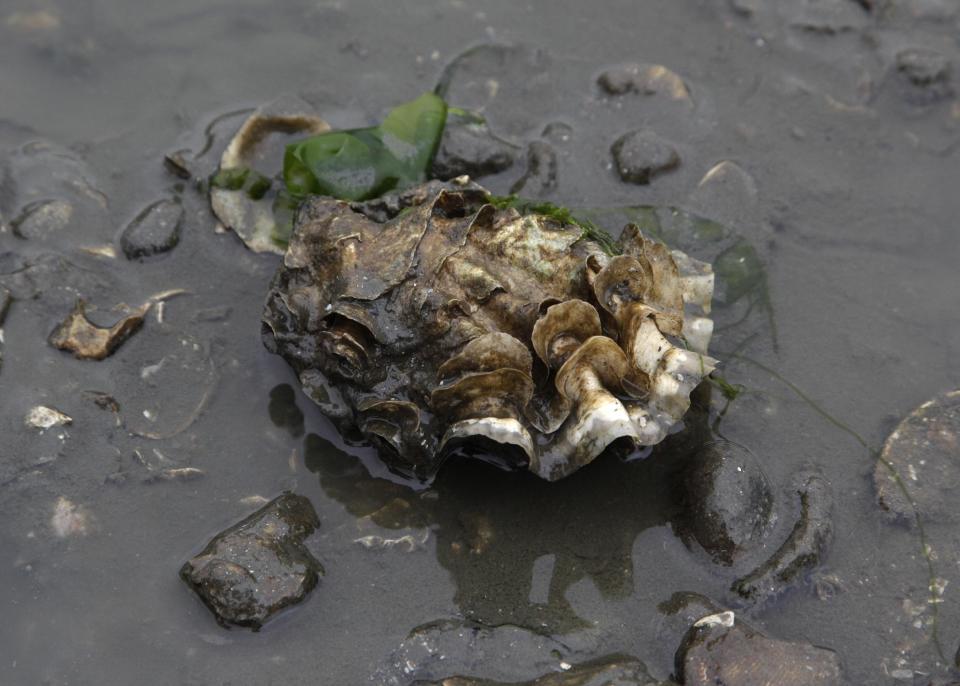
Scientists are blaming slightly higher levels of carbon dioxide in Pacific Ocean waters linked to global warming for the failure of oyster larvae to survive in an Oregon hatchery.
They say higher acidity of the water that comes with more carbon dioxide makes it harder for young oysters to form their shells, dooming them in a matter of days, even if they are moved to more favorable environments.
"A lot of studies talk about the year 2050 when ocean acidification becomes a problem," for sea life, said lead author Alan Barton, production manager at the Whiskey Creek Shellfish Hatchery on Netarts Bay. "It showed up five years ago for us," and almost put the hatchery out of business.
The study appeared Tuesday in the online edition of the journal Limnology and Oceanography.
"The predicted rise of atmospheric CO2 in the next two to three decades may push oyster larval growth past the break-even point in terms of production," study co-author Burke Hales, professor of biogeochemical oceanography at Oregon State University, said in a statement.
The study represents some of the first research taking the issue out of the laboratory and putting it into the natural environment, said Annaliese Hettinger, a doctoral candidate at the University of California at Davis Bodega Lab, who did not take part in the study.
"This is a good example of industry coming together with scientists to come up with potential solutions to the environmental problems we are facing in this area," she said.
Hatcheries and oyster farms relying on natural reproduction started having trouble with larvae survival in 2005, said Barton. At Whiskey Creek, which raises larvae from Pacific and kumamoto oysters that originally come from Japan, they began noticing a correlation between times when ocean upwelling was strong and larvae die-offs.
"One day all the larvae in the hatchery was dead," he said. "It was right in the middle of a big upwelling event. That's when the light went on for us. We needed to start looking at the water chemistry."
Ocean upwelling is a phenomenon on the West Coast triggered by north winds that cause waters from the bottom to rise to the top, bringing with them nutrients that feed the whole food web. Those deep ocean waters have always been more acidic than surface waters. When rising carbon dioxide levels in surface water combined with the deep ocean water, it pushed conditions past the point where oyster larvae could survive, the study found.
Oyster larvae start to form their shells from a form of calcium carbonate called aragonite, said Chris Langdon, a professor of fisheries at Oregon State University who runs the shellfish broodstock program at Hatfield Marine Science Center and took part in the study. Once they stop swimming and attach themselves to a rock or oyster shell, they switch to a tougher form known as calcite that is less vulnerable to acid levels. But by then it is too late.
"It looks like to us that they are the most sensitive in the first 48 hours," said Hales. "If we can just get them over that hump, then they are a lot less sensitive to subsequent variations."
It appears that larvae just don't have the energy to properly form their shells under higher acid conditions, Langdon said.
Hales said the good news is that if hatcheries can manage their water supply to reduce the acidity, either by changing the times they take water from the ocean, or by adding neutralizing chemicals, they will have better larvae survival. However, oysters reproducing in the wild will have a harder time.
