
Sweeping new changes expected at NKorean farms
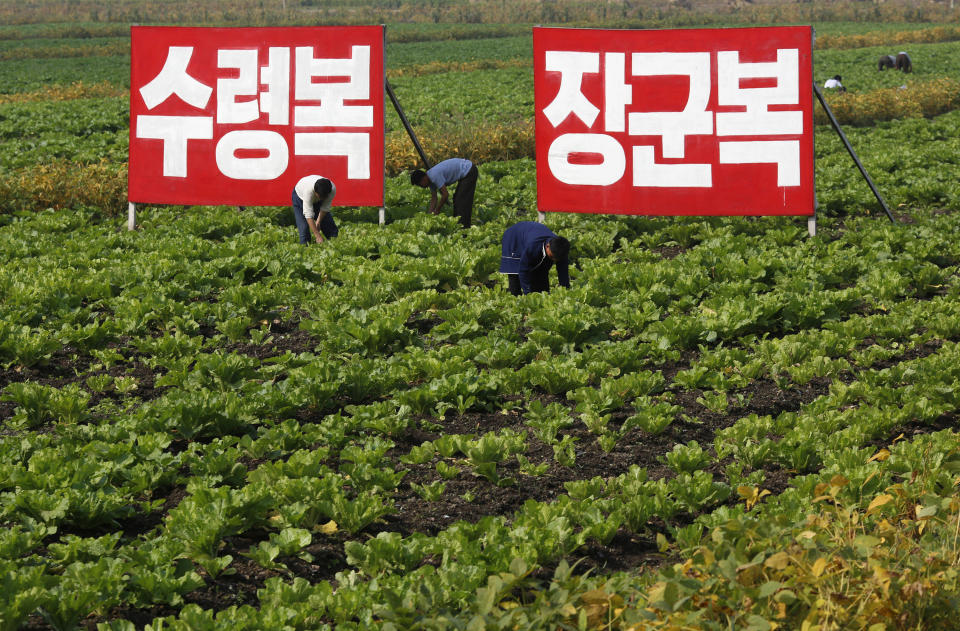

SARIWON, North Korea (AP) — North Korean farmers who have long been required to turn most of their crops over to the state may now be allowed to keep their surplus food to sell or barter in what could be the most significant economic change enacted by young leader Kim Jong Un since he came to power nine months ago.
The proposed directive appears aimed at boosting productivity at collective farms that have struggled for decades to provide for the country's 24 million people. By giving farmers such an incentive to grow more food, North Korea could be starting down the same path as China when it first began experimenting with a market-based economy.
Two workers at a farm south of Pyongyang told The Associated Press about the new rules on Sunday, saying they were informed of the proposed changes during meetings last month and that they should take effect with this year's upcoming fall harvest. The Ministry of Agriculture has not announced the changes, some of which have been widely rumored abroad but never previously made public outside North Korea's farms.
Farmers currently must turn everything over to the state beyond what they are allowed to keep for their families. Under the new rules, they would be able to keep any surplus after they have fulfilled state-mandated quotas — improving morale and giving farmers more of a chance to manage their plots and use the crops as a commodity.
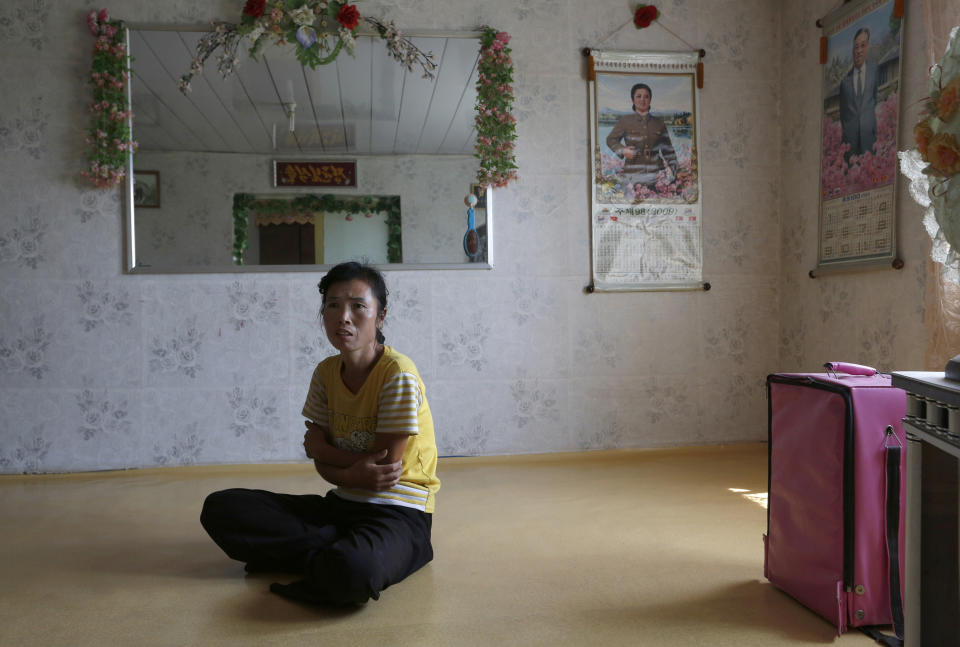
"We expect a good harvest this year," said O Yong Ae, who works at Migok Cooperative Farm, one of the largest and most productive farms in South Hwanghae Province in southwestern North Korea. "I'm happy because we can keep the crops we worked so hard to grow."
The outside world has been watching closely to see how Kim's rule will differ from that of his autocratic father, Kim Jong Il, who died in December, and how he will deal with the country's chronic food shortages.
The proposed changes mimic central elements of China's rural reform in the late 1970s and early 1980s, when China allowed farmers to hold onto their surplus after meeting state quotas, John Delury, an assistant professor at Yonsei University in South Korea who specializes in Chinese and North Korean affairs, said Monday.
The result for China: a significant boost both for the economy and then-leader Deng Xiaoping's popularity.
"Of course, a major difference between the two cases is that the vast majority of the Chinese population were farmers at the time," he said. North Korea has fewer farmers and less arable land, and "will have to find its own formula for successful development."
Kim Jong Un, who inherited a nation with chronic food, fuel and power shortages, has made improving the economy a hallmark of his nascent rule. In his first public speech in April, he openly acknowledged economic hardship in North Korea, and pledged to raise the standard of living.
The young leader, who is the third generation of his family to lead North Korea since his grandfather founded the communist state in 1948, has already has made some significant changes. He dismissed his father's army chief and promoted a younger general. He has also been presenting a much more accessible public persona, appearing among the masses with his wife and giving televised speeches, something his father shunned during his time in power.
However, North Korea has maintained its confrontational stance toward much of the outside world, especially wartime enemies South Korea and the United States. Pyongyang continues to build and develop its nuclear program despite outside pressure to dismantle its atomic facilities in exchange for much-needed aid and international cooperation.
North Korea has a per capita GDP of $1,800 per year, according to the U.S. State Department, far below that of its neighbors in Northeast Asia, and its rocky, mountainous terrain and history of natural disasters has long challenged the Kim regime to provide enough food.
Founder Kim Il Sung created the country's farming system in 1946 by turning farms that had been private during colonial Japanese rule into collective operations.
At cooperative farms across the country, the government doles out fuel, seeds and fertilizer, and farmers pay the government back for the supplies, said Kang Su Ik, a professor at Wonsan Agricultural University.
The farmers' crops go into the Public Distribution System, which aims to provide North Koreans with 600 to 700 grams of rice or cornmeal a day. However, a persistent shortfall of more than 400,000 tons a year in staple grains has meant lower rations all around, according to the United Nations, which has appealed for donations to help North Korea make up for the shortage.
Under the previous system, each farmer could keep as much as 360 kilos of corn or rice a year to consume or sell at the market, in addition to what they grow in their own courtyards. The rest was turned over to the state to distribute as rations, Kang said.
The proposed changes would reverse the equation, challenging farmers to meet a state quota and then allowing them to do as they wish with the rest, including saving it for themselves, selling it at the local farmer's market or bartering it for other goods.
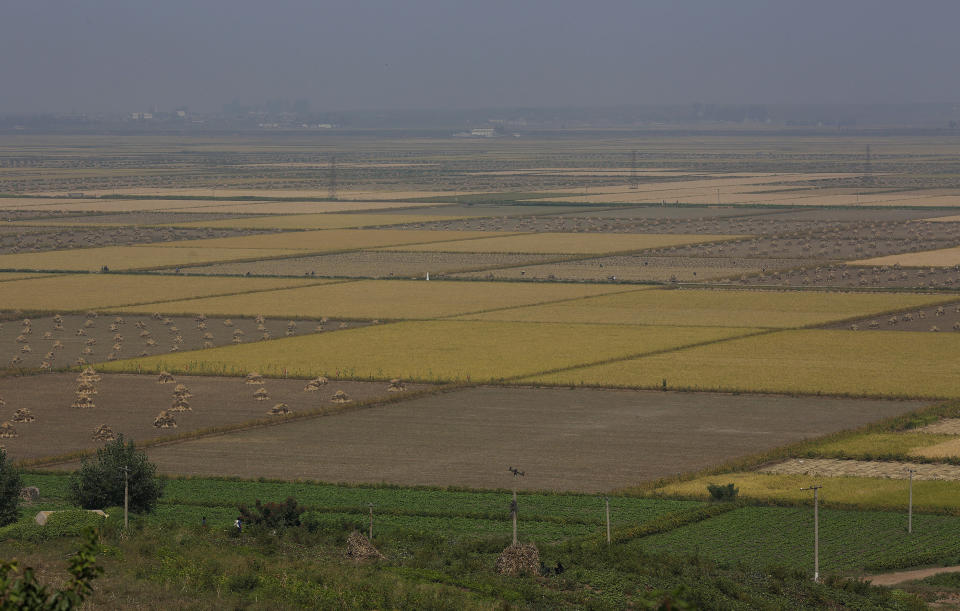
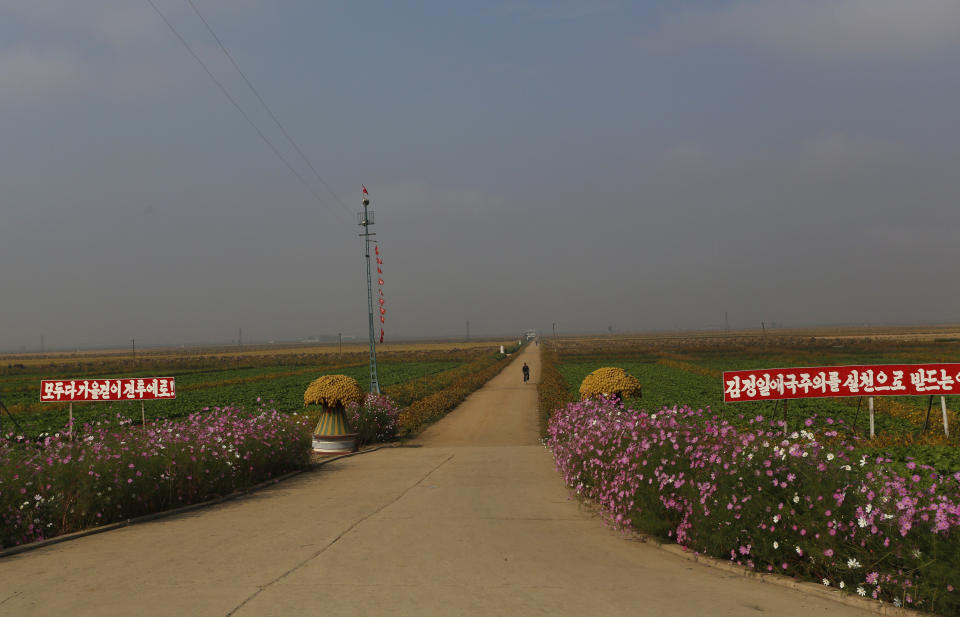
Farmers also would have more control over tending their plots. At Migok, 1,780 farmers work in teams of about 100. In the future, sub-teams of about 20 to 30 farmers are expected to have more say in how to tend their crops, said Kim Yong Ae, who oversees the visitor's center at Migok, where a patchwork of rice paddies stretches as far as the eye can see.
The new rules could be "a very important and constructive step," if they amount to real change, Marcus Noland of the Washington, D.C.-based Peterson Institute for International Economics, said via e-mail.
O, who lives with her rice farmer husband and two young sons in Migok's Apricot Village, brightened up when she said the family expects a surplus this year. Migok was unaffected by the summer rains that destroyed farmland elsewhere in the country, and their private garden is bursting with fruit trees, vegetables and marigolds.
Still, she said they would probably donate their extra rice to the state anyway — an offering known in North Korea as "patriotic rice."
It's unclear whether the agricultural changes will be on the agenda when legislators convene Tuesday in Pyongyang for the Supreme People's Assembly. The gathering marks the parliament's second session of the year, a notable departure from the once-a-year meetings held during Kim Jong Il's rule.
The Presidium of the parliament did not announce an agenda, but Kim Song Chun, a Presidium official, told AP that legislators have been summoned to discuss domestic and foreign policy and to make personnel changes at top state bodies.
___
Follow AP's Korea bureau chief Jean H. Lee at twitter.com/newsjean.
