
Is texting ruining the art of conversation?
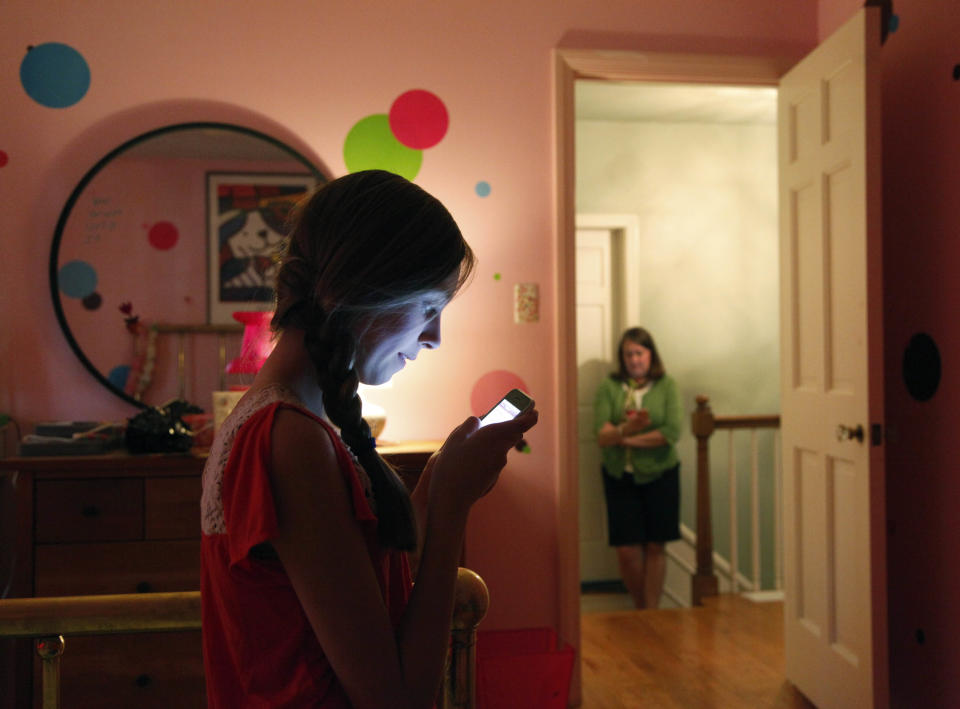
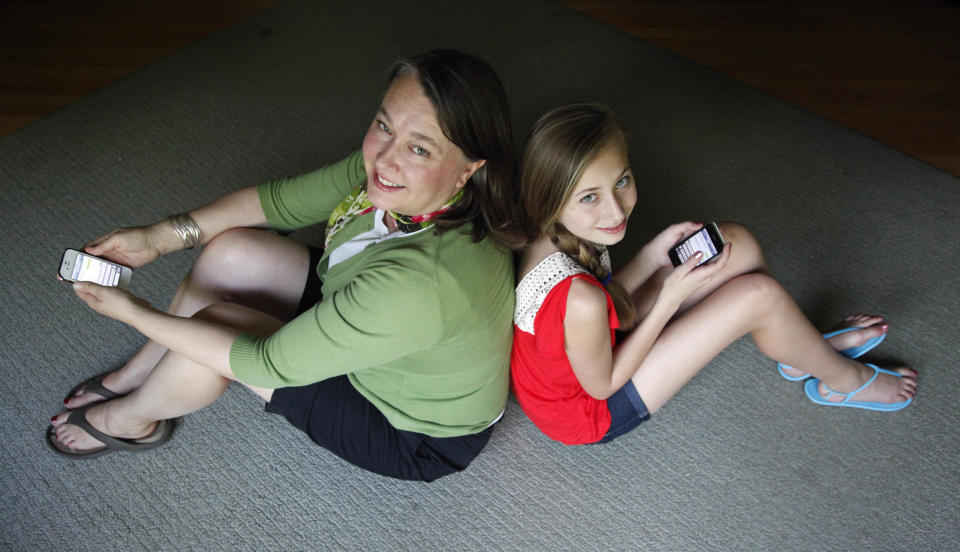
CHICAGO (AP) — Anna Schiferl hadn't even rolled out of bed when she reached for her cell phone and typed a text to her mom, one recent Saturday. Mom was right downstairs in the kitchen. The text? Anna wanted cinnamon rolls for breakfast.
Soon after, the 13-year-old could hear mom's voice echoing through the house.
"Anna," Joanna Schiferl called, "if you want to talk to me, you come downstairs and see me!"
Anna laughs about it now. "I was kind of being lazy," the teen from suburban Chicago concedes. "I know that sounds horrible."
Well, maybe not horrible, but certainly increasingly typical.
Statistics from the Pew Internet & American Life Project show that, these days, many people with cell phones prefer texting over a phone call. It's not always young people, though the data indicate that the younger you are, the more likely you are to prefer texting.
And that's creating a communication divide, of sorts — the talkers vs. the texters.
Some would argue that it's no big deal. What difference should it make how we communicate, as long as we do so?
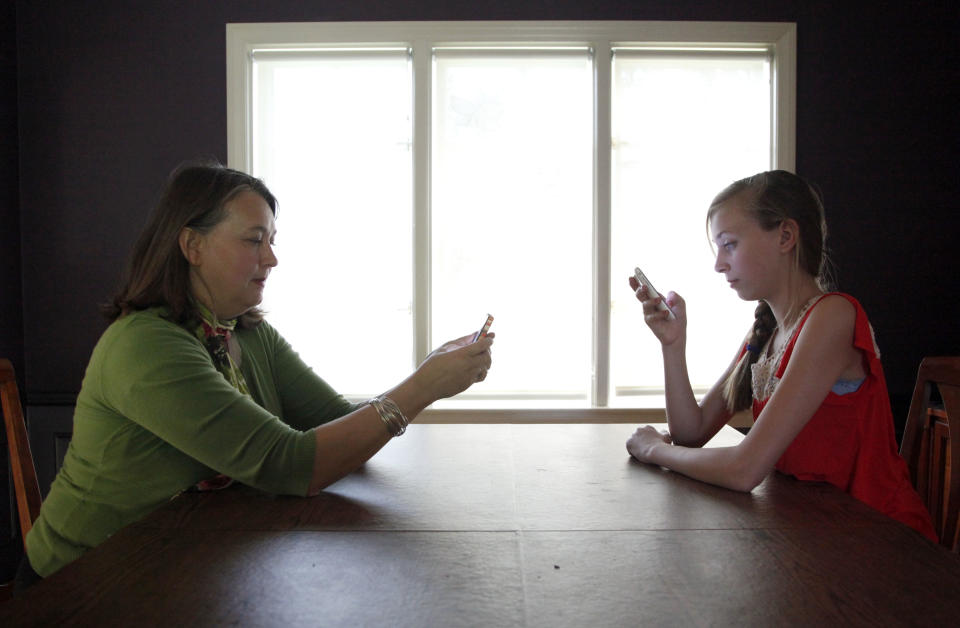
But many experts say the most successful communicators will, of course, have the ability to do both, talk or text, and know the most appropriate times to use those skills. And they fear that more of us are losing our ability to have — or at least are avoiding — the traditional face-to-face conversations that are vital in the workplace and personal relationships.
"It is an art that's becoming as valuable as good writing," says Janet Sternberg, a professor of communication and media studies at Fordham University in New York who is also a linguist.
In the most extreme cases, she's noticed that more students don't look her in the eye and have trouble with the basics of direct conversation — habits that, she says, will not serve them well as they enter a world where many of their elders still expect an in-person conversation, or at the very least a phone call.
On today's college campuses, the dynamic is often different. Forget about things like "office hours," for instance. Many professors say they rarely see students outside of class.
"I sit in my office hours lonely now because if students have a question, they email, often late at night," says Renee Houston, an associate professor of communication studies at the University of Puget Sound in Washington state.
"And they never call, ever."
She recalls overhearing students chuckling about the way people older than them communicate.
"My parents left me a VOICEMAIL. Can you believe it?" one said, as if voicemail had gone the way of the dinosaurs.
This doesn't sound surprising or particularly troublesome to Lisa Auster-Gussman, who'll be a senior this fall at the University of Richmond in Virginia. For her, there are simply particular tools she uses to communicate, depending on the recipient.
Email is for professors, yes. Phone calls and maybe the occasional text are for parents, if the parents know how to do the latter.
"But I don't communicate much with older people. So much of my life is set up over text," says Auster-Gussman, who sends and receives an average of about 6,000 text messages a month.
Many are done as "group texts," sharing messages among eight college friends who live in the same building. The interactions are nothing more than you'd say in a casual conversation, Auster-Gussman says — but they are constant when they're not together.
Recently, for instance, she went to a movie and came out to find 50 text messages waiting for her on her phone.
Meanwhile, last summer, when she was away from her boyfriend, she went days without talking to him on the phone, but texted with him several times a day.
"You're not even really talking to him," she remembers her perplexed father saying.
"But I felt like I was talking to him all day, every day," Auster-Gussman says.
Is there some aversion to talking on the phone? Not really, she says. It's just a preference. In this day and age, it's just what you do.
As Anna, the 13-year-old in suburban Chicago, sees it: "There are people you'll text, but won't call. It's just awkward that way.
"It's not about anything important — just a way to stay in touch with each other."
She and her closest friends also send each other videos of themselves and their surroundings — maybe of their dogs or something new in their bedroom. "People would probably say, like, 'Why don't you just call them?'" Anna says.
Experts say there is, of course, nothing wrong with casual conversation and fun between friends. One could argue that the constant banter — scores of texts each day — keep people more connected. The problem, some communication experts say, is that the conversation isn't particularly deep — and therein lies the problem, says Joseph Grenny, co-author of the book "Crucial Conversations: Tools for Talking When Stakes are High."
"The core problem has existed since we've had telephones — probably since the time of a telegraph," Grenny says. "We loathe having crucial conversations. We are paralyzed and do what we can to avoid them."
That applies to any generation, he says. Texting is just the latest way to do that.
Though they may not always be so good at deep conversations themselves, Grenny suggests that parents model the behavior for their children and put down their own mobile devices. He says they also should set limits, as Anna's mom did when she enforced the "no texting to people under the same roof" rule.
A bit of self-awareness helps, too.
Mary Ann Allison, an assistant professor of media studies at Hofstra University, has her students keep a log of their own communication habits.
"By paying attention to it, they say, 'Wow, it's a really different conversation when you're talking with someone and listening to them," Allison says. They key in on body language, facial expressions and tone of voice — all cues that you lose when you can't see or hear someone, or when you're distracted, even in person, by a gadget.
Sternberg, at Fordham, asks her students to give up one form of electronic communication to see what kind of difference it makes in their lives.
She also has them practice simple tasks such as standing up in a room full of people and introducing themselves. Many of them hate the drill, she says, but later tell her how useful it was, especially in the workplace.
Interestingly, Anna's mom, Joanna Schiferl, is more worried about the effect that texting is having on her daughter's writing skills than her social skills. Anna tends to rush her writing and pays less attention to grammar, or uses abbreviations she'd use in a text. It is a common observation among parents.
So the key, experts say, is to recognize your weak point and work on developing a wide range of communication skills.
"People with a more flexible style, whether they're communicators in person or through technology, will have an easier time adapting," Houston says — and will help bridge the communication gap, generational or otherwise.
That's not always easy in a world where modes of communication are ever-evolving — though young people often adapt with ease.
Houston notes, for instance, that her 13-year-old son is now doing homework with friends via Skype.
And that seems to be a trend. A recent Pew survey found that online video chat is catching on with teens, especially girls. The survey found that 37 percent of Internet users, ages 12 to 17, reported using such applications as Skype, Googletalk or iChat.
Of course, other forms of social networking are still enticing, as Anna's mom discovered one recent evening when she noticed that her daughter was on Facebook when she was supposed to be doing homework.
What did mom do? She broke her own rule.
"I texted her from downstairs," mom says, chuckling, "just to bust her."
___
Martha Irvine is a national writer for The Associated Press. She can be reached at mirvine(at)ap.org or via http://twitter.com/irvineap
