US, EU approve Universal takeover of EMI
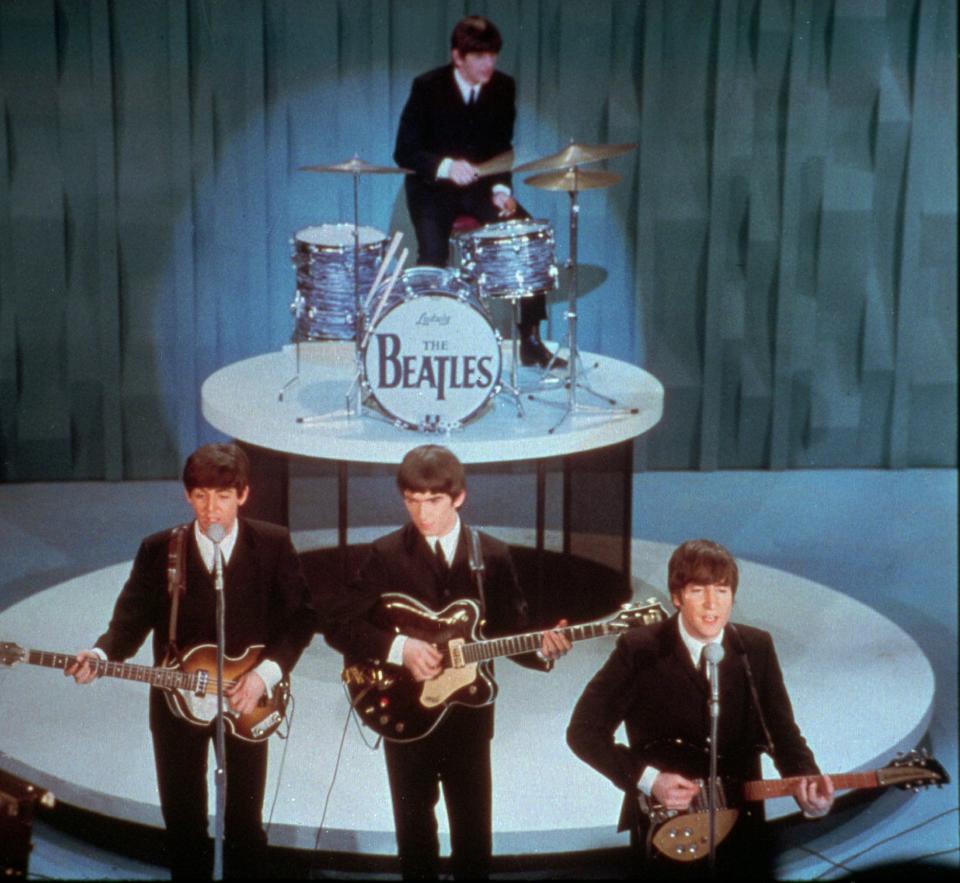

BRUSSELS (AP) — Universal Music Group won approval Friday from American and European regulators to buy the famed British music company EMI, including the hugely lucrative Beatles catalogue. The deal will extend its lead as the world's largest producer of recorded music.
But the EU imposed stringent restrictions and is forcing Universal to sell some of EMI's biggest acts, including Coldplay, David Guetta and Pink Floyd.
The concessions were a bitter pill for Universal, which will pay $1.9 billion for the entire package. It will then have to turn around and sell the rights to many of the artists it acquired. It will hold an auction, hoping to raise hundreds of millions of dollars in a process expected to take another six to nine months to complete. Already 22 bidders have lined up to buy those assets, including the No. 2 and No. 3 music groups, Sony Music and Warner Music Group, according to a person familiar with the matter who declined to be identified because the process is confidential.
Universal CEO Lucian Grainge said that despite the concessions, the deal first announced last November still made sense.
"We would have preferred not to have made the level of divestments we ended up agreeing to. But that was then, this is now," he said in a phone interview from Los Angeles. "We think we've got something that is compelling creatively, compelling financially and compelling strategically."
Among EMI's assets that must go is Parlophone, home to those three acts as well as Kylie Minogue and David Bowie. The Beatles, which is part of Parlophone, was exempted.
Universal will also have to sell EMI's classical music divisions, its French and other local branches and labels that are home to Depeche Mode and The Ramones.
The U.S. Federal Trade Commission said that the Universal and EMI businesses were different enough from each other that the deal wasn't anti-competitive. It added that it didn't see the need to impose the same conditions on the deal as European regulators because of the differences between the U.S. and European markets.
EU Competition Commissioner Joaquin Almunia said that the fact that the companies involved trade in music made the case a particularly emotional one.
"This has been one of the most difficult discussions in my life as commissioner for competition because of ... the existence not only of an industry — we are used to dealing with mergers between companies in very different sectors — but the existence of a cultural dimension," said Almunia.
The FTC's decision was the last hurdle for Universal, which already represents Jay-Z, Nirvana and U2.
Universal's rivals, like Warner Music and small independent labels, had strongly protested the deal, saying it could squeeze out other players. Now many will be lined up in a bid to purchase the rights to artists that will be auctioned to offset Universal's even bigger share of the market.
"This decision has finally put a freeze on Universal's ability to expand further," Helen Smith, executive chair of Impala, an industry group for independent labels, said in a statement Friday. "However, this decision nonetheless reinforces what is already a powerful duopoly."
The Universal deal is one part of the breakup of EMI. Regulators have already allowed a group led by Sony Corp. to buy EMI's music publishing arm for $2.2 billion.
Once the Universal deal goes through, its average market share in European countries will be less than 40 percent after the asset sales, Almunia said.
Simon Dyson, the editor of Music & Copyright, an industry newsletter, said it appeared Universal's global market share would rise from around 29 percent to 34.5 percent — but that because the company was already such a big player, the acquisition was unlikely to drastically change the industry.
"A digital music service can't launch without a company that's got one-third of the world's music, but it also can't launch without a company that has one-quarter," he said. "I genuinely don't see this as big a deal as some of the critics."
Bill Werde, editorial director of music industry magazine Billboard, also favored the deal, saying that recording companies needed to merge to gain power in negotiations with giant technology companies now selling their music.
"These record companies are tiny, tiny companies compared to the players now getting into music: Facebook, Apple, Amazon and Google," Werde said. "I do think it's good that there's a couple of really powerful recorded music companies that hold leverage in terms of the value of music."
Still, the deal will reduce the number of major record labels to three from four.
Almunia said that was a concern for European regulators, and they are trying to remedy it by insisting that Universal sell about two-thirds of the assets they're getting rid of to one buyer, in the hopes of creating another significant player in the music business, even if it won't be as large as the old EMI — which was already the smallest of the four "majors."
He hinted that the EU wouldn't want to see either Warner or Sony be the buyer of that chunk, although he said that it was up to Universal to decide whom they wanted to sell to.
Universal, a unit of Vivendi SA, will have to shed assets that account for 30 percent of EMI's $1.73 billion in annual revenue and the same proportion of its $275 million in annual operating profit, according to another person familiar with the matter who declined to be identified speaking about private financial matters.
Grainge said Universal still hopes to save around $163 million per year by cutting costs. Many cost cuts will likely come by laying off people in jobs that will become redundant in a merged organization.
Vivendi shares rose 2.8 percent to close at 15.69 euros ($20.43) on Friday after the deal was announced.
The company noted that it is acquiring several iconic artists such as Katy Perry, Robbie Williams, Lady Antebellum, Norah Jones — and particularly the Beatles collection. Almunia said the British sensation's songs were exempted from the Parlophone sale because companies themselves proposed asset sales in competition negotiations. The regulator can only then approve or deny the proposal; it does not make its own recommendations for what should be sold off.
Dyson agreed that, even with the asset sales, Universal did pretty well.
"They've got arguably the two biggest bands in history — the Beatles and the Rolling Stones," he said. "That's nothing to sniff at."
___
Nakashima reported from Los Angeles.
